Prehab: How to Get Fit for Surgery in the Weeks Before Your Operation
By Roberto Iglesias, MD, FACS, General Surgeon
Last updated: October 21, 2026
Please read: this article is general education, not medical advice. Before you start a new exercise program or change your diet, talk with your own surgeon or doctor, especially if you have heart or lung disease, diabetes, kidney disease, or a recent cancer diagnosis.
When surgery is on the calendar, most people focus on the day of the operation. I'd like you to think about the weeks before it. That time is a real opportunity. What you do now can help your body handle the stress of surgery, heal faster, and get you back home sooner. Doctors call this prehabilitation, or "prehab."
What is prehab?
Rehab is what you do after surgery to get your strength back. Prehab is the same idea, done before surgery. A good prehab plan usually works on several things at once:
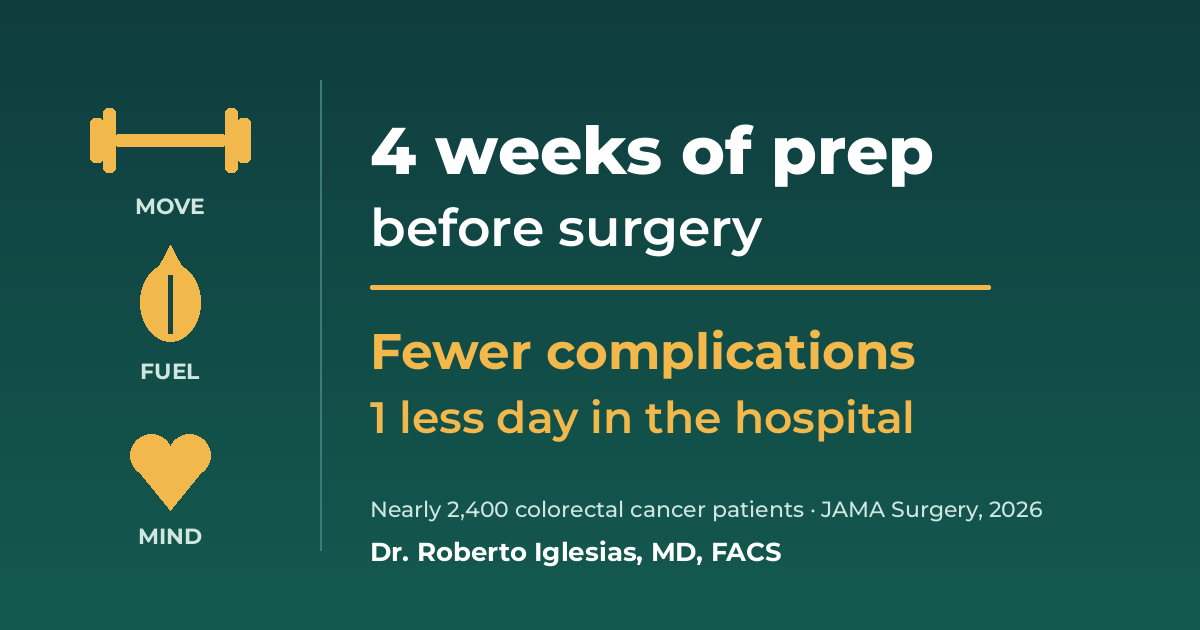
- Move: walking, strength exercises, and, if your doctor says it's safe, some harder interval workouts.
- Fuel: eating enough protein and healthy food so your body has what it needs to heal.
- Mind: lowering stress and worry, sleeping well, and understanding what to expect.
- Clean up risks: quitting smoking, cutting back on alcohol, and getting conditions like diabetes or anemia (a low blood count) under better control.
Why the weeks before surgery matter: think "training camp"
An operation is a big physical event, a bit like running a race you didn't choose. Athletes don't show up to race day without training, and you don't have to either. People who come into surgery stronger, better nourished, and calmer often have more "reserve" to draw on. That reserve can help them get out of bed sooner, breathe more deeply, and bounce back if something doesn't go perfectly.
The good news: you don't need months. Many prehab programs last just 3 to 4 weeks, which often fits in the normal waiting time before a planned operation.
What the research shows
A large study published in JAMA Surgery in 2026 looked at prehab in the real world. Eighteen hospitals in the Netherlands offered a 3- to 4-week program to adults having planned surgery for colon or rectal cancer. It included supervised exercise three times a week with a physical therapist, a visit with a dietitian and extra protein, emotional support and education from a nurse, help with anemia, diabetes, and frailty, and a program to quit smoking.
The researchers compared 2,384 patients: half who were offered prehab and half who were similar patients treated at the same hospitals before the program started.
What they found (within 90 days of surgery):
- Fewer complications: 30.1% of the prehab group had at least one complication, compared with 37.8% of the comparison group.
- Shorter hospital stay: the typical stay was 4 days instead of 5, about 1 day shorter.
- Fewer ICU stays (4.4% vs. 8.1%) and fewer return trips to the hospital (8.2% vs. 11.1%).
- Both younger and older patients benefited: complications were lower in people under 70 and in people 70 and older.
An honest note: this was not a randomized trial, the kind of study where a coin flip decides who gets the program. The researchers carefully matched the two groups, but other differences over time could still play a role. Also, not everyone finished the full program, and the results still counted them. Even so, the findings line up with other research:
- A 2026 review in the Journal of the American College of Surgeons combined 23 randomized trials (2,182 patients) across many kinds of surgery. Exercise or nutrition prehab programs cut the odds of complications by about half and shortened hospital stays a little (about half a day on average).
- A 2026 review in the British Journal of Anaesthesia of 42 studies found that supervised exercise before surgery was linked to about 40% lower odds of complications. Home exercise on your own improved fitness, but didn't show the same drop in complications. The studies didn't compare the two head to head, so it's not the final word.
What about my operation? The big Dutch study was in colon and rectal cancer surgery. The reviews included a mix of operations. Whether you're having a hernia repair, gallbladder surgery, colon surgery, or another planned operation, the basics below are safe, sensible habits for most people. The size of the benefit can vary with the type of surgery and your health, so ask your surgeon what makes sense for you.
Your prehab plan
1. Move
- Walk every day. Start where you are, even 10 minutes, and add a few minutes every couple of days. For general health, U.S. guidelines suggest building toward 150 minutes a week of moderate activity, like brisk walking.
- Add strength work 2 or more days a week. Sit-to-stands from a chair, wall push-ups, step-ups, and light weights or bands all count. Stronger legs make it easier to get out of bed after surgery.
- Intervals, if you're cleared. The Dutch program used supervised high-intensity interval training: short bursts of harder effort with rest in between. Ask your doctor before doing this on your own.
- Practice deep breathing. A few slow, deep breaths several times a day helps you get ready to keep your lungs open after surgery.
2. Fuel
- Get protein at every meal: eggs, Greek yogurt, milk, fish, chicken, beans, tofu, or a protein shake. In the Dutch program, a dietitian set a goal of about 1.2 to 1.5 grams of protein per kilogram of body weight a day. For a 150-pound person, that's roughly 80 to 100 grams. If you have kidney disease, ask your doctor first.
- Don't skip meals, and don't start a crash diet right before surgery. Your body needs fuel to heal.
- Tell your doctor if you've lost weight without trying or have a poor appetite. A dietitian can help.
3. Mind
- Know the plan. Write down your questions and bring them to your pre-op visit. Knowing what to expect lowers worry.
- Protect your sleep and keep a regular bedtime.
- Manage stress with whatever works for you: prayer, a short walk, music, slow breathing, or talking with family.
- Line up your support people for rides, meals, and help at home after surgery.
- Ask for help if you feel very anxious or down. That's common, and it's treatable.
4. Stop smoking and cut back on alcohol
Smoking raises the risk of lung problems, wound infections, and slow healing after surgery. The World Health Organization reports that people who quit about 4 weeks or more before surgery have fewer complications. Every week without tobacco helps. Free help is available at 1-800-QUIT-NOW (1-800-784-8669), or in Spanish at 1-855-DÉJELO-YA (1-855-335-3569). Cut back on alcohol too, and be honest with your care team about how much you drink.
5. Work with your doctor on your health conditions
- Diabetes: ask whether your blood sugar is well controlled. High blood sugar around surgery raises the risk of wound infection.
- Anemia: a low blood count can often be improved with iron before surgery.
- Medicines: ask which ones to keep taking and which to stop before surgery, including blood thinners, weight-loss medicines, and supplements.
A simple 4-week sample plan
This is a starting point, not a prescription. Adjust it to your fitness level and your doctor's advice.
| Week | Move | Fuel | Mind |
|---|
| Week 1 | Walk 10 to 15 minutes a day. Sit-to-stands from a chair: 2 sets of 8 to 10, 2 days this week. | Add a protein food to every meal. | Write your questions for your surgeon. Set a quit date if you smoke. |
| Week 2 | Walk 15 to 20 minutes a day. Strength work 2 to 3 days: sit-to-stands, wall push-ups, step-ups. | Keep protein at every meal. Drink water through the day. | 5 minutes of slow breathing a day. Keep a regular bedtime. |
| Week 3 | Walk 20 to 30 minutes, with some faster stretches if you feel well (intervals only if cleared). | Plan easy meals for after surgery; stock up on protein foods. | Arrange rides and help at home. Review your medicine list with your doctor. |
| Week 4 | Keep it up, but ease off the hardest workouts in the last day or two before surgery. | Follow your surgeon's eating and drinking instructions for the day before surgery. | Pack your bag and bring your questions. You've trained for this. |
Questions to ask your surgeon
- Is there a supervised prehab program I can join before my surgery?
- What kind of exercise is safe for me, and how hard should I push?
- Should I see a dietitian? How much protein should I aim for?
- Do I need blood tests for anemia or blood sugar before surgery?
- Which of my medicines and supplements should I stop, and when?
- How soon after surgery will I be up and walking?
Stop exercising and call 911 if you have chest pain or pressure, severe shortness of breath, or feel faint.
Call your doctor if you get dizzy, have new or worsening pain, have a racing or irregular heartbeat, or swelling in one leg. Also call if your symptoms from the condition you're having surgery for get worse, such as more bleeding, belly pain, vomiting, or a hernia bulge that becomes painful and won't go back in.
The bottom line
The weeks before surgery are your training camp. Walking, getting stronger, eating enough protein, caring for your mind, and quitting smoking are simple steps that can help you come through surgery stronger and go home sooner. Start today, start small, and bring your questions to your surgeon.
If you're my patient and have surgery coming up, ask us at your visit about getting ready. To schedule, call my office or visit the Appointments section of my homepage.
— Roberto Iglesias, MD, FACS
This article is for general education and is not a substitute for personal medical advice. Last updated October 21, 2026.
Sources
- Sabajo CR, Slooter GD, et al. Nationwide implementation of multimodal prehabilitation and complications after colorectal cancer surgery. JAMA Surgery. Published online May 20, 2026. doi:10.1001/jamasurg.2026.1519
- Cascavita CT, et al. Exercise- and nutrition-based prehabilitation programs in surgery: a systematic review and meta-analysis. Journal of the American College of Surgeons. 2026. See also the American College of Surgeons news release.
- Assessing impact of supervision in aerobic exercise training on fitness and clinical outcomes: a systematic review and meta-analysis. British Journal of Anaesthesia. 2026.
- World Health Organization. Smoking greatly increases risk of complications after surgery. January 20, 2020.
- American College of Surgeons. Strong for Surgery.
- U.S. Department of Health and Human Services. Physical Activity Guidelines for Americans: top 10 things to know.
- Centers for Disease Control and Prevention. Quitlines and other cessation support resources.
Image credits
- Prehab graphic: created for drrobertoiglesias.com.
Prehabilitación: cómo prepararse física y mentalmente en las semanas antes de su cirugía
Por el Dr. Roberto Iglesias, MD, FACS, cirujano general
Última actualización: 21 de octubre de 2026
Por favor, lea esto: este artículo es educativo y no reemplaza el consejo médico. Antes de empezar un programa de ejercicio nuevo o cambiar su alimentación, hable con su cirujano o su médico, sobre todo si tiene enfermedad del corazón o de los pulmones, diabetes, enfermedad de los riñones o un diagnóstico reciente de cáncer.
Cuando ya tiene fecha para una cirugía, casi todo el mundo piensa en el día de la operación. Yo le quiero pedir que piense en las semanas antes. Ese tiempo es una verdadera oportunidad. Lo que usted haga ahora puede ayudar a que su cuerpo aguante mejor el estrés de la cirugía, sane más rápido y regrese antes a su casa. Los médicos llamamos a esto prehabilitación, o "prehab".
¿Qué es la prehabilitación?
La rehabilitación es lo que se hace después de la cirugía para recuperar la fuerza. La prehabilitación es la misma idea, pero antes de la cirugía. Un buen plan de prehabilitación casi siempre trabaja varias cosas a la vez:
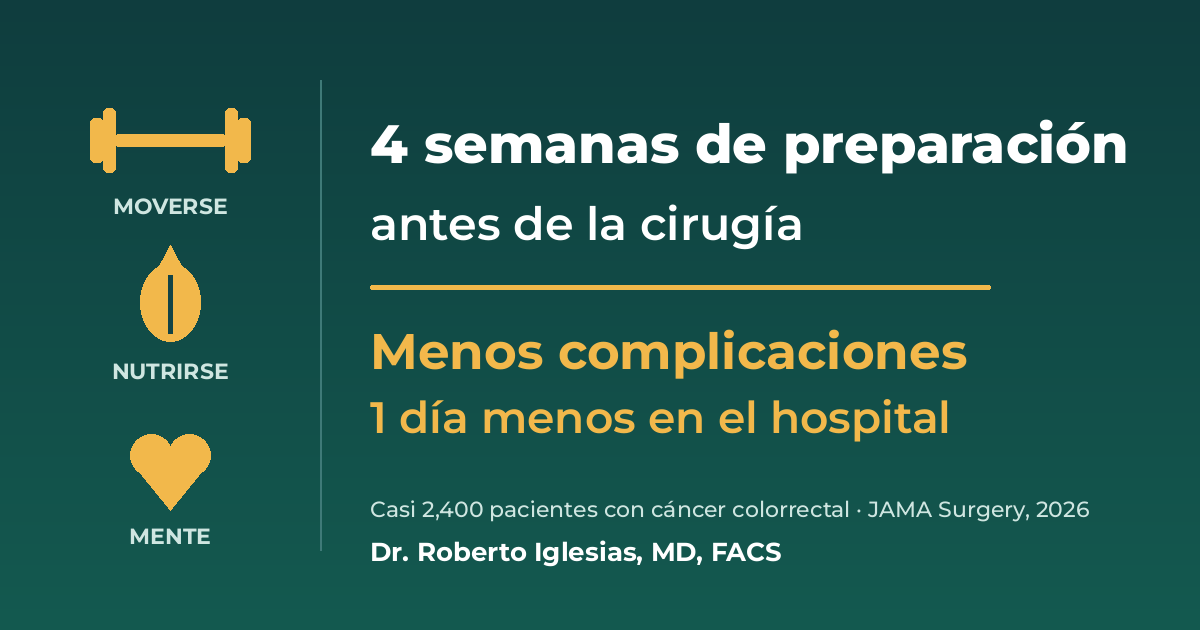
- Moverse: caminar, hacer ejercicios de fuerza y, si su médico dice que es seguro, algunos ejercicios por intervalos más intensos.
- Nutrirse: comer suficiente proteína y comida saludable para que su cuerpo tenga lo que necesita para sanar.
- Mente: bajar el estrés y la preocupación, dormir bien y entender qué va a pasar.
- Reducir riesgos: dejar de fumar, tomar menos alcohol y controlar mejor problemas como la diabetes o la anemia (glóbulos rojos bajos).
Por qué importan las semanas antes de la cirugía: piense en un "campo de entrenamiento"
Una operación es un esfuerzo grande para el cuerpo, algo así como correr una carrera que usted no escogió. Los atletas no llegan al día de la carrera sin entrenar, y usted tampoco tiene que hacerlo. Las personas que llegan a la cirugía más fuertes, mejor alimentadas y más tranquilas muchas veces tienen más "reserva". Esa reserva les ayuda a levantarse de la cama más pronto, respirar más profundo y recuperarse si algo no sale perfecto.
La buena noticia: no necesita meses. Muchos programas de prehabilitación duran solo 3 a 4 semanas, lo que muchas veces cabe en el tiempo normal de espera antes de una operación programada.
Lo que muestra la investigación
Un estudio grande publicado en JAMA Surgery en 2026 estudió la prehabilitación en la vida real. Dieciocho hospitales de los Países Bajos ofrecieron un programa de 3 a 4 semanas a adultos que iban a tener una cirugía programada por cáncer de colon o de recto. Incluía ejercicio supervisado tres veces por semana con un fisioterapeuta, una consulta con un nutricionista y proteína adicional, apoyo emocional y educación de parte de una enfermera, ayuda con la anemia, la diabetes y la fragilidad, y un programa para dejar de fumar.
Los investigadores compararon a 2,384 pacientes: la mitad recibió el programa y la otra mitad eran pacientes parecidos, operados en los mismos hospitales antes de que existiera el programa.
Lo que encontraron (en los 90 días después de la cirugía):
- Menos complicaciones: el 30.1% del grupo de prehabilitación tuvo al menos una complicación, comparado con el 37.8% del otro grupo.
- Menos días en el hospital: la estancia típica fue de 4 días en lugar de 5, más o menos 1 día menos.
- Menos ingresos a cuidados intensivos (4.4% vs. 8.1%) y menos regresos al hospital (8.2% vs. 11.1%).
- Ayudó a jóvenes y mayores: hubo menos complicaciones tanto en menores de 70 años como en personas de 70 años o más.
Una nota honesta: este no fue un estudio aleatorizado, es decir, uno en el que se decide al azar quién recibe el programa. Los investigadores emparejaron con cuidado a los dos grupos, pero otros cambios con el tiempo podrían haber influido. Además, no todos terminaron el programa completo, y aun así se contaron en los resultados. Con todo, los resultados coinciden con otras investigaciones:
- Una revisión de 2026 en el Journal of the American College of Surgeons reunió 23 estudios aleatorizados (2,182 pacientes) de muchos tipos de cirugía. Los programas de ejercicio o de nutrición bajaron más o menos a la mitad la probabilidad de complicaciones y acortaron un poco la estancia en el hospital (alrededor de medio día en promedio).
- Una revisión de 2026 en el British Journal of Anaesthesia de 42 estudios encontró que el ejercicio supervisado antes de la cirugía se asoció con cerca de un 40% menos de probabilidad de complicaciones. El ejercicio en casa por su cuenta mejoró la condición física, pero no mostró la misma baja en complicaciones. Los estudios no compararon las dos formas directamente, así que no es la última palabra.
¿Y mi operación? El estudio grande de los Países Bajos fue en cirugía de cáncer de colon y recto. Las revisiones incluyeron varios tipos de operaciones. Ya sea que le vayan a reparar una hernia, quitar la vesícula, operar el colon u otra cirugía programada, los pasos básicos de abajo son hábitos seguros y sensatos para la mayoría de las personas. El beneficio puede variar según el tipo de cirugía y su salud, así que pregúntele a su cirujano qué le conviene a usted.
Su plan de prehabilitación
1. Moverse
- Camine todos los días. Empiece donde está, aunque sean 10 minutos, y agregue unos minutos cada par de días. Para la salud en general, las guías de EE. UU. recomiendan llegar poco a poco a 150 minutos por semana de actividad moderada, como caminar a paso rápido.
- Haga ejercicios de fuerza 2 o más días por semana. Pararse y sentarse de una silla, flexiones contra la pared, subir un escalón y pesas ligeras o ligas elásticas cuentan. Unas piernas más fuertes le facilitan levantarse de la cama después de la cirugía.
- Intervalos, si su médico lo autoriza. El programa de los Países Bajos usó entrenamiento por intervalos de alta intensidad supervisado: ratos cortos de más esfuerzo con descansos en medio. Pregúntele a su médico antes de hacerlo por su cuenta.
- Practique la respiración profunda. Unas cuantas respiraciones lentas y profundas varias veces al día le ayudan a prepararse para mantener los pulmones bien abiertos después de la cirugía.
2. Nutrirse
- Coma proteína en cada comida: huevos, yogur griego, leche, pescado, pollo, frijoles, tofu o un batido de proteína. En el programa de los Países Bajos, un nutricionista fijaba una meta de unos 1.2 a 1.5 gramos de proteína por kilo de peso al día. Para una persona de 150 libras (unos 68 kilos), eso es más o menos de 80 a 100 gramos. Si usted tiene enfermedad de los riñones, pregúntele primero a su médico.
- No se salte comidas ni empiece una dieta estricta justo antes de la cirugía. Su cuerpo necesita energía para sanar.
- Avísele a su médico si ha bajado de peso sin querer o tiene poco apetito. Un nutricionista le puede ayudar.
3. Mente
- Conozca el plan. Escriba sus preguntas y llévelas a su cita antes de la cirugía. Saber qué esperar baja la preocupación.
- Cuide su sueño y acuéstese a la misma hora.
- Maneje el estrés con lo que a usted le funcione: la oración, una caminata corta, música, respirar despacio o platicar con su familia.
- Organice a su gente de apoyo para que le lleven, le ayuden con la comida y en la casa después de la cirugía.
- Pida ayuda si se siente muy nervioso o decaído. Es algo común y tiene tratamiento.
4. Deje de fumar y tome menos alcohol
Fumar aumenta el riesgo de problemas de los pulmones, infecciones de la herida y una cicatrización lenta después de la cirugía. La Organización Mundial de la Salud informa que las personas que dejan de fumar unas 4 semanas o más antes de la cirugía tienen menos complicaciones. Cada semana sin tabaco ayuda. Hay ayuda gratis en español en el 1-855-DÉJELO-YA (1-855-335-3569). Tome menos alcohol también, y sea sincero con su equipo médico sobre cuánto toma.
5. Trabaje con su médico en sus problemas de salud
- Diabetes: pregunte si su azúcar está bien controlada. El azúcar alta alrededor de la cirugía aumenta el riesgo de infección de la herida.
- Anemia: muchas veces los glóbulos rojos bajos se pueden mejorar con hierro antes de la cirugía.
- Medicamentos: pregunte cuáles debe seguir tomando y cuáles debe suspender antes de la cirugía, incluidos los anticoagulantes, los medicamentos para bajar de peso y los suplementos.
Un plan sencillo de 4 semanas
Esto es un punto de partida, no una receta. Ajústelo a su condición física y a lo que le recomiende su médico.
| Semana | Moverse | Nutrirse | Mente |
|---|
| Semana 1 | Camine de 10 a 15 minutos al día. Pararse y sentarse de una silla: 2 series de 8 a 10, 2 días esta semana. | Agregue un alimento con proteína a cada comida. | Escriba sus preguntas para su cirujano. Si fuma, ponga una fecha para dejarlo. |
| Semana 2 | Camine de 15 a 20 minutos al día. Fuerza 2 a 3 días: pararse de la silla, flexiones contra la pared, subir un escalón. | Siga con proteína en cada comida. Tome agua durante el día. | 5 minutos de respiración lenta al día. Acuéstese a la misma hora. |
| Semana 3 | Camine de 20 a 30 minutos, con algunos ratos más rápidos si se siente bien (intervalos solo si su médico lo autoriza). | Planee comidas fáciles para después de la cirugía; compre alimentos con proteína. | Organice quién le lleva y quién le ayuda en casa. Revise su lista de medicamentos con su médico. |
| Semana 4 | Siga así, pero baje la intensidad de los ejercicios más fuertes uno o dos días antes de la cirugía. | Siga las instrucciones de su cirujano sobre qué comer y beber el día antes de la cirugía. | Prepare su maleta y lleve sus preguntas. Usted se preparó para esto. |
Preguntas para su cirujano
- ¿Hay un programa de prehabilitación supervisado al que me pueda unir antes de mi cirugía?
- ¿Qué tipo de ejercicio es seguro para mí y qué tanto me debo esforzar?
- ¿Debo ver a un nutricionista? ¿Cuánta proteína debo comer?
- ¿Necesito análisis de sangre para anemia o azúcar antes de la cirugía?
- ¿Cuáles de mis medicamentos y suplementos debo suspender, y cuándo?
- ¿Qué tan pronto voy a poder levantarme y caminar después de la cirugía?
Deje de hacer ejercicio y llame al 911 si tiene dolor o presión en el pecho, mucha falta de aire o siente que se va a desmayar.
Llame a su médico si se marea, tiene un dolor nuevo o que empeora, el corazón le late muy rápido o de forma irregular, o se le hincha una pierna. Llame también si empeoran los síntomas del problema por el que lo van a operar, como más sangrado, dolor de estómago, vómito o una hernia que duele y no se regresa a su lugar.
En resumen
Las semanas antes de la cirugía son su campo de entrenamiento. Caminar, ponerse más fuerte, comer suficiente proteína, cuidar su mente y dejar de fumar son pasos sencillos que le pueden ayudar a salir de la cirugía más fuerte y regresar antes a casa. Empiece hoy, empiece poco a poco y lleve sus preguntas a su cirujano.
Si usted es mi paciente y tiene una cirugía próxima, pregúntenos en su cita cómo prepararse. Para hacer una cita, llame a mi consultorio o visite la sección de Citas de mi página principal.
— Roberto Iglesias, MD, FACS
Este artículo es educativo y no reemplaza el consejo médico personal. Última actualización: 21 de octubre de 2026.
Fuentes
- Sabajo CR, Slooter GD, et al. Nationwide implementation of multimodal prehabilitation and complications after colorectal cancer surgery (en inglés). JAMA Surgery. Publicado en línea el 20 de mayo de 2026. doi:10.1001/jamasurg.2026.1519
- Cascavita CT, et al. Exercise- and nutrition-based prehabilitation programs in surgery: a systematic review and meta-analysis (en inglés). Journal of the American College of Surgeons. 2026. Vea también el comunicado del American College of Surgeons (en inglés).
- Assessing impact of supervision in aerobic exercise training on fitness and clinical outcomes: a systematic review and meta-analysis (en inglés). British Journal of Anaesthesia. 2026.
- Organización Mundial de la Salud. Smoking greatly increases risk of complications after surgery (en inglés). 20 de enero de 2020.
- American College of Surgeons. Strong for Surgery (en inglés).
- Departamento de Salud y Servicios Humanos de EE. UU. Physical Activity Guidelines for Americans: top 10 things to know (en inglés).
- Centros para el Control y la Prevención de Enfermedades (CDC). Quitlines and other cessation support resources (en inglés).
Créditos de imágenes
- Gráfico de prehabilitación: creado para drrobertoiglesias.com.