Groin (Inguinal) Hernia: What It Is and How It's Fixed
By Roberto Iglesias, MD, FACS, General Surgeon
A bulge in the groin that comes and goes is one of the most common things I see in my office. Most of the time it's an inguinal hernia. It's very treatable, and in many cases you have time to decide on the best plan. Here's what you need to know, in plain English.
What is an inguinal hernia?
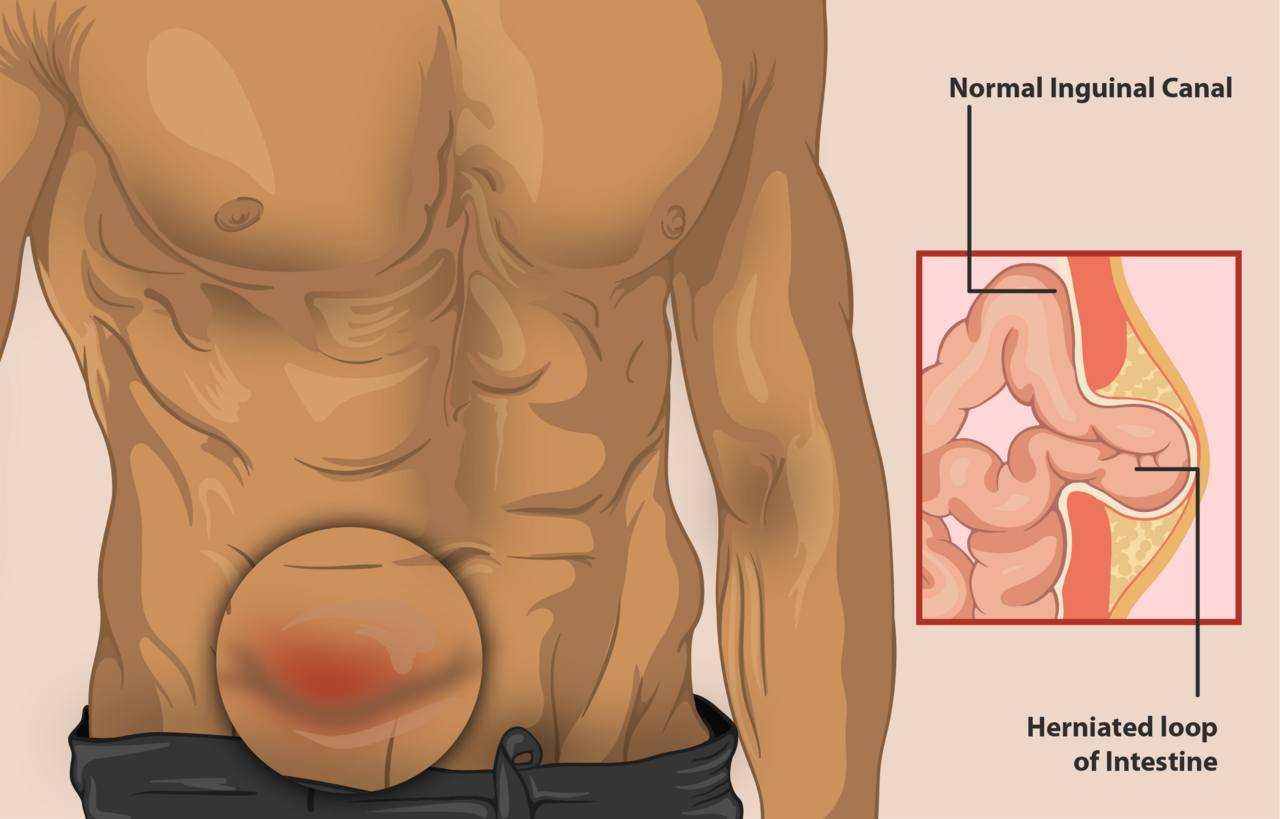
Your belly wall has a natural passage on each side of the groin called the inguinal canal. An inguinal hernia happens when fat or a piece of intestine pushes through a weak spot there and makes a bulge.
Some people are born with an opening that never fully closed (an indirect hernia). Others develop a weak spot later in life (a direct hernia). Hernias can also happen a little lower, through the femoral canal. These femoral hernias are more common in women.
Who gets them? Inguinal hernias are common. U.S. National Institutes of Health researchers estimate that about 27 in 100 men and 3 in 100 women will develop one at some point. They're more likely in men, as we get older, after prostate surgery, and in people with a family history of hernias. Chronic cough, constipation, and heavy lifting can add strain.
Symptoms
- A bulge in the groin, or in the scrotum in men
- Discomfort, aching, heaviness, or burning in the groin
- Symptoms that get worse when you lift, strain, cough, or stand a long time, and better when you lie down
- A bulge that often goes back in when you lie down or press on it gently
Watchful waiting or surgery?
A hernia will not heal on its own. But not every hernia needs surgery right away.
- If your hernia causes symptoms, international hernia guidelines (HerniaSurge) recommend repairing it.
- If you're a man with a hernia that causes few or no symptoms, it is usually safe to wait and watch, because the risk of an emergency is low. Most men who wait will eventually develop symptoms, usually pain, and choose surgery. NIH notes that about 70 in 100 men who delay surgery need it within 5 years.
- Women's groin hernias are more often femoral hernias, which are more likely to get stuck, so I usually recommend repair.
Your age, health, work, and lifestyle all matter. We'll decide together.
⚠️ Emergency signs: a stuck or strangled hernia
Sometimes a hernia gets stuck (incarcerated) and won't go back in. If its blood supply gets pinched off, it is strangulated. That is an emergency that can damage the intestine.
Go to the emergency room right away if:
- The bulge is suddenly bigger, hard, or won't go back in when it used to
- You have sudden or severe pain at the hernia
- The skin over it turns red or dark
- You have fever
- You have nausea, vomiting, bloating, or can't pass gas or stool
How it's repaired: open, laparoscopic, or robotic, with mesh
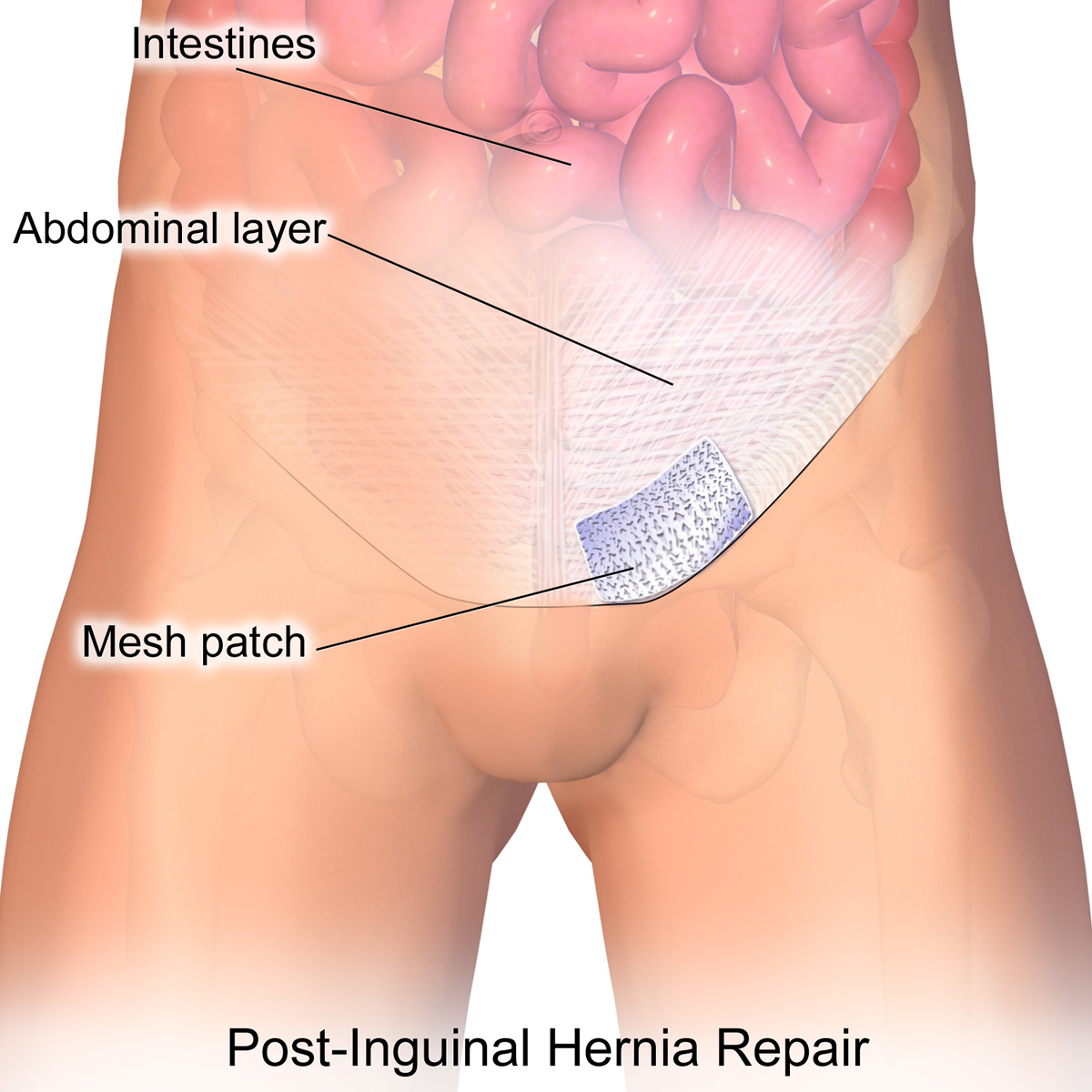
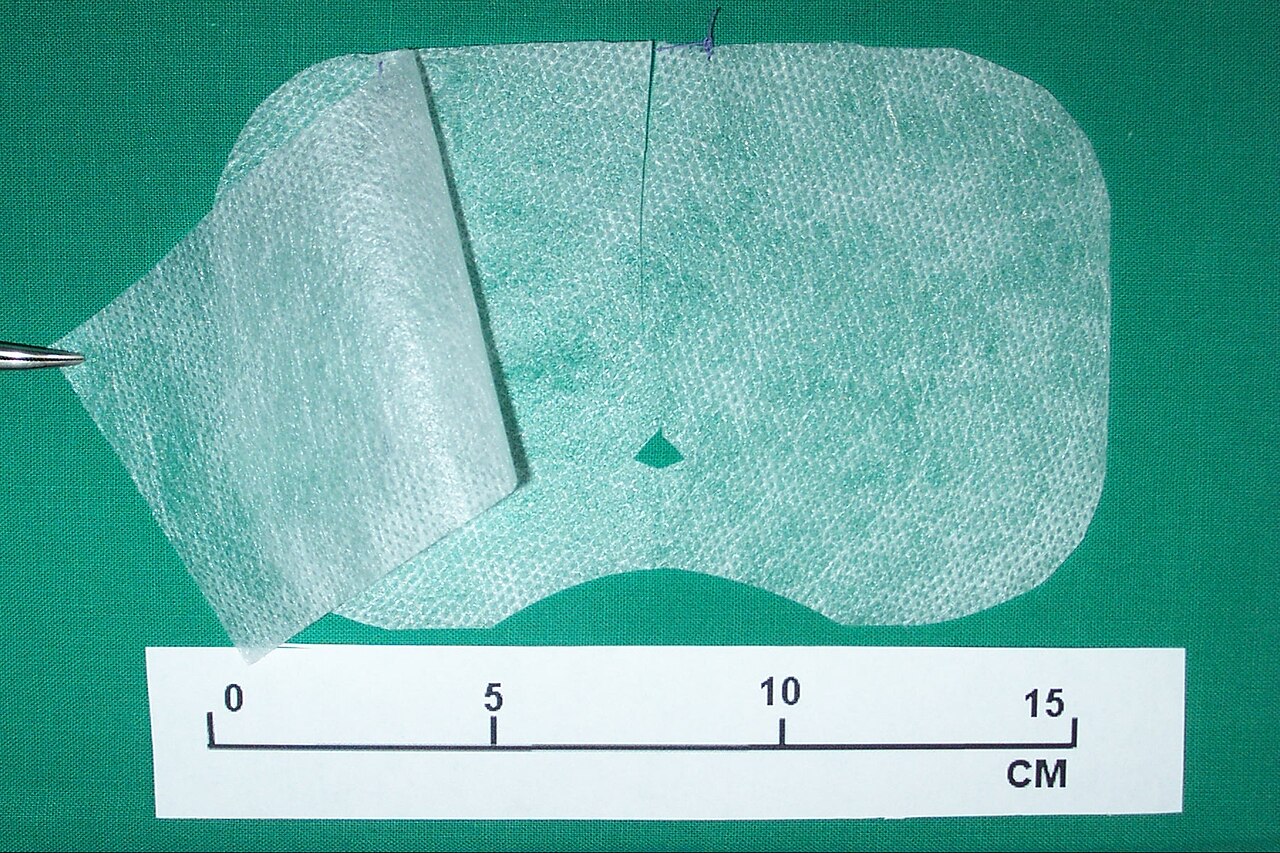
The goal of surgery is to put the hernia contents back where they belong and reinforce the weak spot. Guidelines recommend mesh as the first choice for most adults, because it lowers the chance of the hernia coming back. Mesh is a soft, flexible medical screen. Your body grows into it, and it becomes part of a stronger wall.
Open repair: I make one incision over the hernia, repair it, and place mesh on the front side of the muscle.
Laparoscopic or robotic repair: I make a few small incisions in the lower belly and place the mesh from the inside, behind the muscle wall. This is done under general anesthesia. According to the HerniaSurge guidelines, in experienced hands this approach offers faster recovery and a lower risk of long-term pain. It also lets me check and fix the other side if a hernia is hiding there too.
The best approach depends on you: the hernia's size, whether it's on one side or both, prior surgeries, and your overall health. Most groin hernia repairs are same-day surgery.
A note from me about the robot: Sometimes I do this operation with the help of the surgical robot. Whether we use it depends on you: your body, your hernia, and what will work best for you. Either way, it is still a minimally invasive operation through small incisions, and I am the one performing it. The robot does not operate on its own; it simply holds the instruments while I guide every move.
A balanced word about mesh
I know many patients have seen lawsuit ads about "mesh," so let me be straightforward.
Why I usually use mesh: Most groin hernia mesh is made of polypropylene, a soft, permanent synthetic material that has been used for decades. Repairing a hernia with mesh lowers the chance of the hernia coming back compared with repairing it with stitches alone. That's why the international HerniaSurge guidelines recommend mesh as the first choice for most adults. The vast majority of my patients heal well with mesh and never think about it again.
Possible problems: Like any implant, mesh isn't risk-free. The FDA has reviewed hernia mesh safety. Problems that can happen include:
- Long-lasting (chronic) groin pain. This can also happen after repairs without mesh.
- Infection
- Mesh moving (migration) or shrinking (contraction)
- Rarely, needing another operation to remove part or all of the mesh
Hernia mesh is not vaginal mesh. Many of the mesh problems in the news involved mesh used for pelvic and vaginal surgery in women. That's a different operation in a different part of the body, and those problems don't necessarily apply to hernia repair.
When I may not use mesh: In some cases a repair with stitches alone is the better choice. Examples include when the area is contaminated (for example, an emergency where strangulated bowel has to be removed), when the risk of infection is high, in some younger patients, or simply because you prefer it. Well-tested tissue repairs, such as the Shouldice repair, are an option for the right patient. We'll talk through what's best for you.
Want to read more? The FDA's page on hernia surgical mesh and the SAGES patient FAQ on hernia mesh are both good, easy-to-read sources.
Recovery
- Pain: usually mild, and NIH notes it typically fades within about 2 weeks. Ice and simple pain relievers usually do most of the work.
- Back to daily life: many people return to light activity and desk work within 3 to 5 days.
- Lifting: follow the specific limits I give you. The repair needs time to settle in.
- Walking: start the day of surgery.
- Swelling and bruising in the groin or scrotum are common and go away.
- Constipation: prevent it with fluids, fiber, and a stool softener if you take narcotics. Straining is not your friend.
- Driving: not while taking narcotic pain medicine.
When to call your surgeon
Call our office right away, or go to the emergency room after hours, if you have:
- Fever of 101°F (38.3°C) or higher, or chills
- Bleeding, drainage, or redness at an incision
- Groin pain or swelling that keeps getting worse, or pain not controlled by your medicine
- Trouble urinating
- Nausea, vomiting, or belly swelling
- Trouble breathing or chest pain. Call 911.
The bottom line
Groin hernias are common and very fixable. If yours bothers you, repair (usually with mesh, often through small incisions) gets most people back to normal quickly. If it doesn't bother you, waiting can be a safe choice, as long as you know the emergency signs. I'm happy to examine you and help you decide.
— Roberto Iglesias, MD, FACS
This article is for general education and is not a substitute for personal medical advice.
Sources
- National Institute of Diabetes and Digestive and Kidney Diseases (NIDDK). Inguinal Hernia.
- The HerniaSurge Group. International guidelines for groin hernia management. Hernia. 2018;22:1–165. doi:10.1007/s10029-017-1668-x
- U.S. Food and Drug Administration (FDA). Hernia Surgical Mesh Implants.
- SAGES. Frequently Asked Questions About Mesh for Hernia Repair.
Image credits
Hernia inguinal (en la ingle): qué es y cómo se repara
Por Roberto Iglesias, MD, FACS, cirujano general
Un bulto en la ingle que aparece y desaparece es una de las cosas que más veo en mi consulta. La mayoría de las veces es una hernia inguinal. Tiene muy buen tratamiento y, en muchos casos, usted tiene tiempo para decidir el mejor plan. Esto es lo que necesita saber, en palabras sencillas.
¿Qué es una hernia inguinal?
La pared del abdomen tiene un pasaje natural a cada lado de la ingle llamado conducto inguinal. Una hernia inguinal ocurre cuando grasa o un pedazo de intestino empuja a través de un punto débil en esa zona y forma un bulto.
Algunas personas nacen con una abertura que nunca se cerró del todo (hernia indirecta). Otras desarrollan un punto débil más adelante en la vida (hernia directa). Las hernias también pueden salir un poco más abajo, por el conducto femoral. Estas hernias femorales son más comunes en las mujeres.
¿Quién las tiene? Las hernias inguinales son comunes. Investigadores de los Institutos Nacionales de Salud de EE. UU. calculan que unos 27 de cada 100 hombres y 3 de cada 100 mujeres tendrán una en algún momento. Son más probables en los hombres, con la edad, después de una cirugía de próstata y en personas con familiares que han tenido hernias. La tos crónica, el estreñimiento y cargar cosas pesadas pueden aumentar la presión.
Síntomas
- Un bulto en la ingle, o en el escroto en los hombres
- Molestia, dolor sordo, pesadez o ardor en la ingle
- Síntomas que empeoran al cargar, pujar, toser o estar mucho tiempo de pie, y mejoran al acostarse
- Un bulto que muchas veces se mete solo al acostarse o al empujarlo con suavidad
¿Esperar y vigilar, u operar?
Una hernia no se cura sola. Pero no todas las hernias necesitan cirugía de inmediato.
- Si su hernia le causa síntomas, las guías internacionales de hernias (HerniaSurge) recomiendan repararla.
- Si usted es hombre y su hernia le causa pocos o ningún síntoma, por lo general es seguro esperar y vigilar, porque el riesgo de una emergencia es bajo. La mayoría de los hombres que esperan terminan teniendo síntomas, casi siempre dolor, y deciden operarse. Los Institutos Nacionales de Salud señalan que unos 70 de cada 100 hombres que posponen la cirugía la necesitan dentro de 5 años.
- En las mujeres, las hernias de la ingle son más a menudo femorales, que tienen más probabilidad de atorarse, así que por lo general recomiendo repararlas.
Su edad, su salud, su trabajo y su estilo de vida importan. Lo decidiremos juntos.
⚠️ Señales de emergencia: una hernia atorada o estrangulada
A veces una hernia se atora (encarcelada) y ya no se mete. Si se le corta el flujo de sangre, está estrangulada. Es una emergencia que puede dañar el intestino.
Vaya a la sala de emergencias de inmediato si:
- El bulto de pronto está más grande, duro o ya no se mete cuando antes sí lo hacía
- Tiene dolor repentino o fuerte en la hernia
- La piel encima se pone roja u oscura
- Tiene fiebre
- Tiene náuseas, vómitos, el abdomen inflado, o no puede expulsar gases ni evacuar
Cómo se repara: cirugía abierta, laparoscópica o robótica, con malla
El objetivo de la cirugía es regresar el contenido de la hernia a su lugar y reforzar el punto débil. Las guías recomiendan la malla como primera opción para la mayoría de los adultos, porque disminuye la probabilidad de que la hernia regrese. La malla es una tela médica suave y flexible. Su cuerpo crece a través de ella, y se vuelve parte de una pared más fuerte.
Reparación abierta: Hago una incisión sobre la hernia, la reparo y coloco la malla por delante del músculo.
Reparación laparoscópica o robótica: Hago unas pocas incisiones pequeñas en la parte baja del abdomen y coloco la malla por dentro, detrás de la pared muscular. Se hace con anestesia general. Según las guías HerniaSurge, en manos con experiencia esta técnica ofrece una recuperación más rápida y menos riesgo de dolor a largo plazo. También me permite revisar y reparar el otro lado si ahí también hay una hernia escondida.
La mejor técnica depende de usted: el tamaño de la hernia, si está de un lado o de ambos, cirugías anteriores y su salud en general. La mayoría de las reparaciones de hernia inguinal son cirugía ambulatoria (se va a casa el mismo día).
Una nota mía sobre el robot: A veces hago esta operación con la ayuda del robot quirúrgico. Usarlo o no depende de usted: de su cuerpo, de su hernia y de lo que mejor le convenga. De cualquier forma, sigue siendo una operación mínimamente invasiva con incisiones pequeñas, y soy yo quien la realiza. El robot no opera por sí solo; simplemente sostiene los instrumentos mientras yo guío cada movimiento.
Una palabra equilibrada sobre la malla
Sé que muchos pacientes han visto anuncios de demandas sobre "la malla", así que quiero hablarle con franqueza.
Por qué normalmente uso malla: La mayoría de las mallas para hernia inguinal son de polipropileno, un material sintético suave y permanente que se usa desde hace décadas. Reparar una hernia con malla disminuye la probabilidad de que la hernia regrese en comparación con repararla solo con puntos. Por eso las guías internacionales HerniaSurge recomiendan la malla como primera opción para la mayoría de los adultos. La gran mayoría de mis pacientes sanan bien con la malla y nunca vuelven a pensar en ella.
Posibles problemas: Como cualquier implante, la malla no está libre de riesgos. La FDA (la agencia de medicamentos y dispositivos médicos de EE. UU.) ha revisado la seguridad de la malla para hernias. Los problemas que pueden ocurrir incluyen:
- Dolor en la ingle que dura mucho tiempo (crónico). También puede pasar después de reparaciones sin malla.
- Infección
- Que la malla se mueva (migración) o se encoja (contracción)
- En raras ocasiones, necesitar otra operación para quitar parte o toda la malla
La malla para hernia no es la malla vaginal. Muchos de los problemas con mallas que salen en las noticias tuvieron que ver con mallas usadas en cirugías pélvicas y vaginales en mujeres. Es otra operación, en otra parte del cuerpo, y esos problemas no necesariamente aplican a la reparación de hernias.
Cuándo puedo no usar malla: En algunos casos es mejor una reparación solo con puntos. Por ejemplo, cuando la zona está contaminada (como en una emergencia en la que hay que quitar intestino estrangulado), cuando el riesgo de infección es alto, en algunos pacientes jóvenes, o simplemente porque usted lo prefiere. Las reparaciones con el propio tejido bien estudiadas, como la reparación de Shouldice, son una opción para el paciente adecuado. Hablaremos de lo que más le conviene.
¿Quiere leer más? La página de la FDA sobre la malla quirúrgica para hernias y las preguntas frecuentes de SAGES sobre la malla para hernias son buenas fuentes y fáciles de leer (en inglés).
Recuperación
- Dolor: por lo general es leve, y los Institutos Nacionales de Salud señalan que suele desaparecer en unas 2 semanas. El hielo y los analgésicos sencillos casi siempre son suficientes.
- Volver a la vida diaria: muchas personas regresan a actividades ligeras y al trabajo de oficina en 3 a 5 días.
- Cargar peso: siga los límites específicos que yo le dé. La reparación necesita tiempo para asentarse.
- Caminar: empiece el mismo día de la cirugía.
- La hinchazón y los moretones en la ingle o el escroto son comunes y se quitan.
- Estreñimiento: prevéngalo con líquidos, fibra y un ablandador de heces si toma narcóticos. Pujar no le conviene.
- Manejar: no mientras tome analgésicos narcóticos.
Cuándo llamar a su cirujano
Llame a nuestra oficina de inmediato, o vaya a la sala de emergencias fuera del horario, si tiene:
- Fiebre de 101 °F (38.3 °C) o más, o escalofríos
- Sangrado, secreción o enrojecimiento en una herida
- Dolor o hinchazón en la ingle que sigue empeorando, o dolor que no se controla con su medicamento
- Dificultad para orinar
- Náuseas, vómitos o abdomen hinchado
- Dificultad para respirar o dolor de pecho. Llame al 911.
En resumen
Las hernias de la ingle son comunes y tienen muy buena solución. Si la suya le molesta, la reparación (por lo general con malla y muchas veces con incisiones pequeñas) permite que la mayoría vuelva pronto a la normalidad. Si no le molesta, esperar puede ser una opción segura, siempre que conozca las señales de emergencia. Con gusto lo examino y le ayudo a decidir.
— Roberto Iglesias, MD, FACS
Este artículo es solo para educación general y no reemplaza el consejo médico personal.
Fuentes
- National Institute of Diabetes and Digestive and Kidney Diseases (NIDDK). Inguinal Hernia (en inglés).
- The HerniaSurge Group. International guidelines for groin hernia management. Hernia. 2018;22:1–165. doi:10.1007/s10029-017-1668-x
- Administración de Alimentos y Medicamentos de EE. UU. (FDA). Hernia Surgical Mesh Implants (en inglés).
- SAGES. Frequently Asked Questions About Mesh for Hernia Repair (en inglés).
Créditos de las imágenes


