Incisional Hernias: Repair Options and an Honest Guide to Mesh
By Roberto Iglesias, MD, FACS, General Surgeon
If you've had belly surgery and now notice a bulge in or near the scar, you may have an incisional hernia. These are some of the most common hernias I treat, and also some of the most varied. Some are small and simple. Others are large and complex. In this article I'll explain what they are, how we prepare you for surgery, how we repair them, and, in detail, the different kinds of mesh and what the research says about each.
What is an incisional hernia?
When a surgeon closes the belly wall, the muscle layer heals with scar tissue. Sometimes that scar stretches or pulls apart, leaving a hole. Fat or intestine can then push through and make a bulge under the skin. This can happen months or even years after the original operation.
Common symptoms:
- A bulge in or near an old scar that gets bigger when you stand, cough, or strain
- Aching, pulling, or a feeling of weakness in the belly wall
- Sometimes skin changes over a large hernia
Who is more likely to get one?
An incisional hernia is more likely when:
- The original incision got infected
- You smoke
- You carry extra weight
- You have diabetes, especially if your blood sugar isn't well controlled
- You had a large incision, an emergency operation, or several operations in the same area
- Healing was slowed by medicines such as steroids, or by poor nutrition
Many of these are also the things that make a repair more likely to have problems. That's why preparation matters so much.
⚠️ Emergency signs
Go to the emergency room right away if your hernia becomes hard, very painful, or won't push back in, the skin over it turns red or dark, or you have vomiting, bloating, or can't pass gas or stool. These can mean the hernia is stuck or strangulated, and that needs urgent surgery.
Getting ready: "prehab" makes a real difference
For a planned (non-emergency) repair, I'll often ask you to work on a few things first. These steps can lower your chance of infection and of the hernia coming back:
- Stop smoking, ideally at least 4 weeks before surgery and for good. SAGES notes that smoking can raise the risk of infection and of the hernia returning.
- Work toward a healthier weight if you carry extra pounds. For large hernias, I may recommend weight loss before surgery.
- Get blood sugar under control if you have diabetes. I'll often check your A1c.
- Eat enough protein, and stay active with daily walking.
Sometimes this means waiting a few weeks or months before surgery. It's worth it.
Repair options
- Small hernias can sometimes be closed with stitches, but most incisional hernias are repaired with mesh, because stitches alone have a higher chance of the hernia coming back (see the data below).
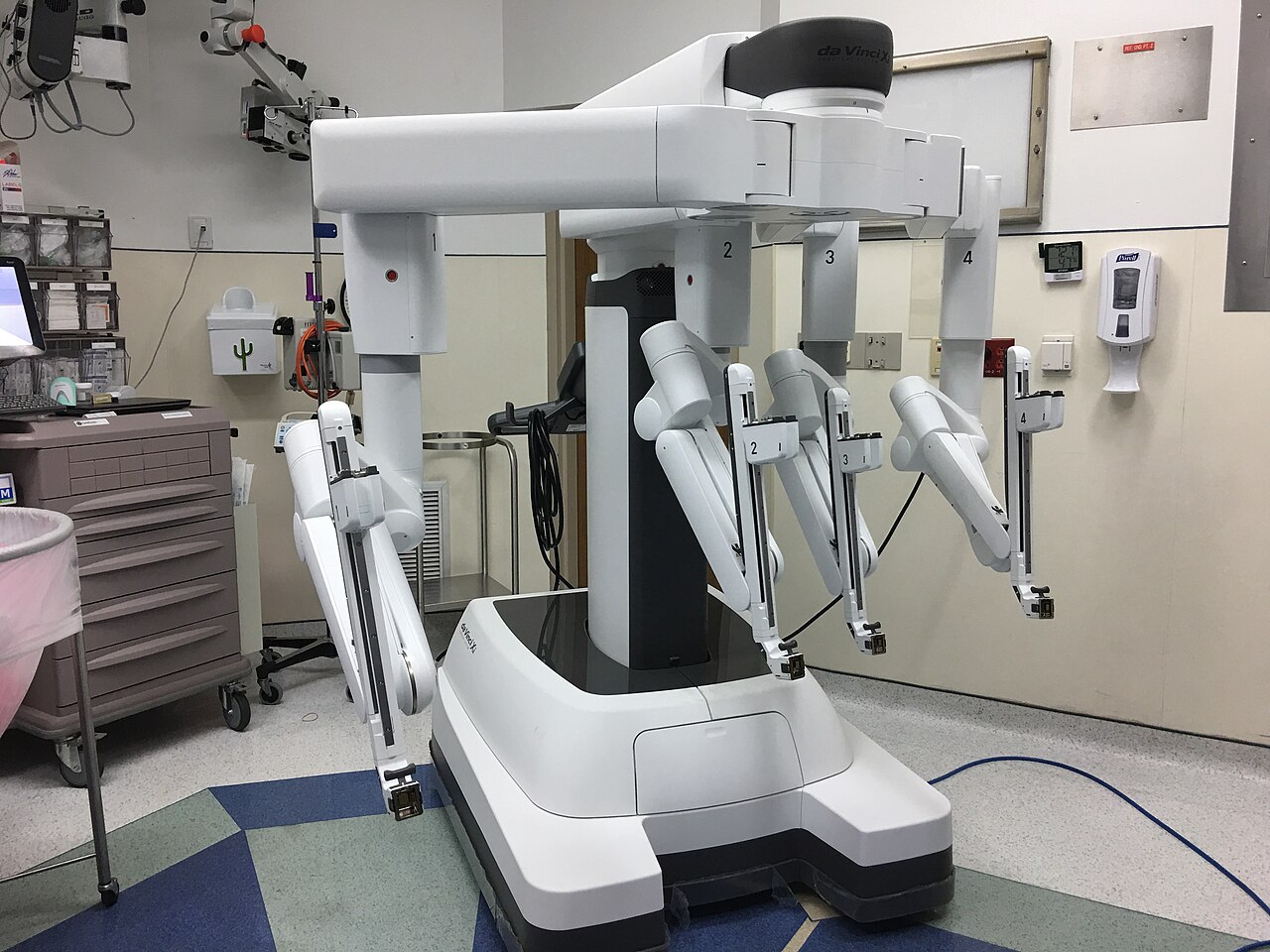
- Laparoscopic or robotic repair: a few small incisions away from the hernia. The hernia is closed and the mesh is placed from inside. This approach often means smaller incisions and fewer wound problems.
- Open repair: an incision over the hernia. This is often best for very large hernias, when there's extra skin or an old scar to remove, or when there is contamination or infection.
- Component separation (abdominal wall reconstruction): for large hernias, I can release certain muscle layers so the two sides of the belly wall can slide back together in the middle. The mesh is then usually placed behind the muscle (retromuscular). This can be done open or robotically in selected patients.
A note from me about the robot: Sometimes I do this operation with the help of the surgical robot. Whether we use it depends on you: your body, your hernia, and what will work best for you. Either way, it is still a minimally invasive operation through small incisions, and I am the one performing it. The robot does not operate on its own; it simply holds the instruments while I guide every move.
Mesh: the details
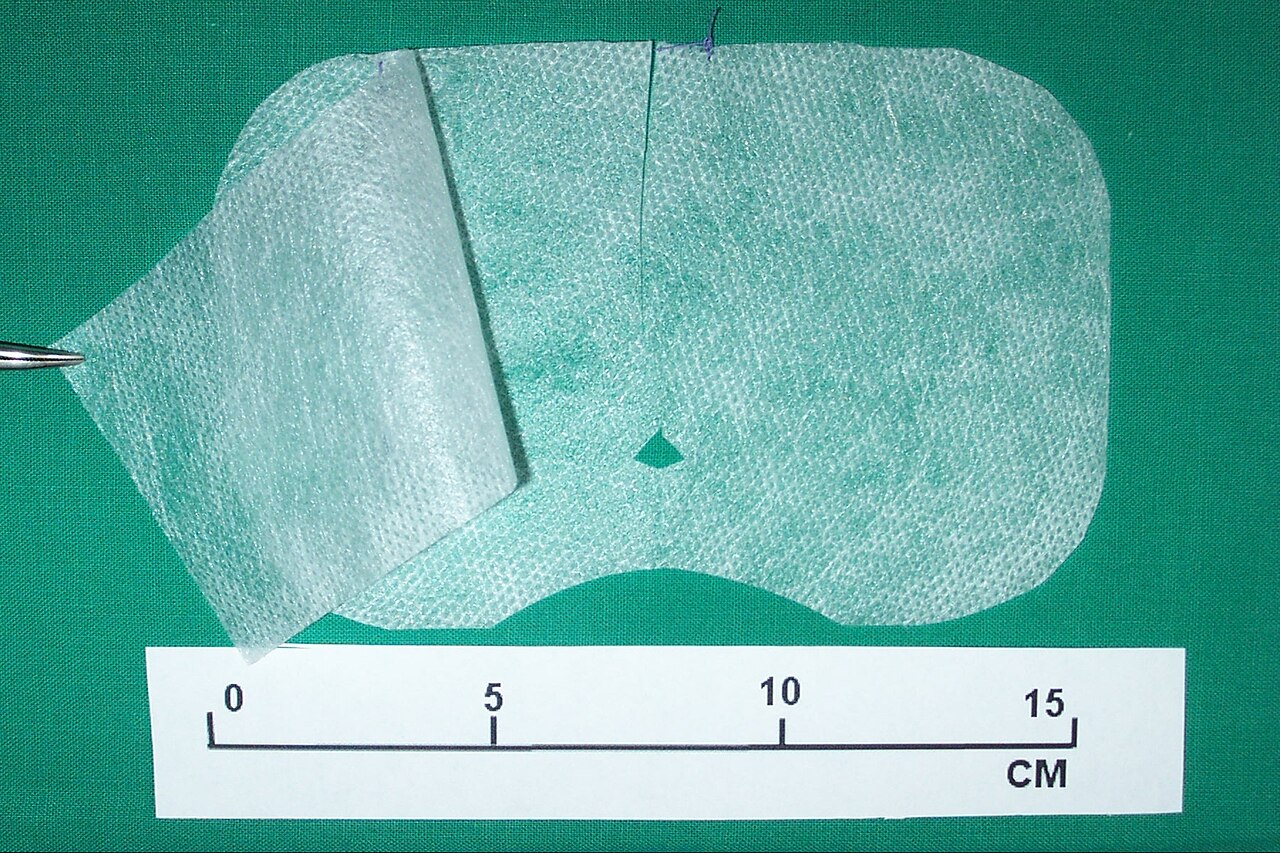
This is the part patients ask me about most. Here is what the research really shows, without the hype or the scare tactics.
First: mesh or stitches?
A large Danish national study (Kokotovic, JAMA 2016) followed 3,242 people for about 5 years after a planned incisional hernia repair:
- Needed another operation because the hernia came back: 17.1% after stitches alone, compared with 12.3% after open mesh repair and 10.6% after laparoscopic mesh repair.
- Needed another operation for a mesh-related problem: 5.6% after open mesh repair and 3.7% after laparoscopic mesh repair, compared with 0.8% for repairs done without mesh.
What that means for you: mesh lowers the chance of the hernia coming back, and that's why it's my usual choice. But mesh is not free of trade-offs. A small number of people will have a mesh problem over the years. That's an honest balance, not a reason to fear mesh.
The main families of mesh
1. Permanent synthetic mesh (polypropylene or polyester)
- What it is: a durable plastic mesh that stays in your body for life. Some versions have a coating on one side so they can sit inside the belly next to the intestines. An example is Ventralight ST, which is polypropylene with an absorbable coating.
- Pros: the strongest long-term reinforcement, the longest track record, and inexpensive.
- Cons: it is permanent. If it ever becomes infected or causes a problem, part or all of it may need to be removed.
2. Slowly absorbable "biosynthetic" mesh (for example, Phasix, made of P4HB)
- What it is: a lab-made material that gives support while your own tissue grows in, and then is gradually absorbed by the body. Studies describe resorption over roughly 12 to 18 months.
- The idea: to get reinforcement during healing without leaving a permanent implant.
- The data:
- In a 5-year multicenter study of 121 higher-risk patients with clean wounds (Roth, J Am Coll Surg 2022), the estimated recurrence was 22% and wound infection about 10%. Reoperation for any reason was 14.9%. Fewer than half the patients completed the full 5 years, so these numbers are estimates.
- A Dutch 5-year study of high-risk patients (Van den Dop, Ann Surg Open 2023) found about 16% recurrence and no long-term mesh complications.
- Bottom line: a reasonable option for some higher-risk patients, but it has not been proven better than permanent synthetic mesh in head-to-head trials.
3. Biologic mesh (processed animal tissue, for example, Strattice, from pig skin)
- What it is: animal tissue that has been cleaned of cells so your body can grow into it.
- The idea: to hold up better than synthetic mesh in a contaminated or infected field.
- The data:
- In the RICH study (Itani, Surgery 2012), 80 patients had contaminated hernias repaired with Strattice. At 2 years, 66% had some wound event and 28% had a recurrence, although no mesh had to be completely removed. This study was supported by the manufacturer.
- The strongest evidence comes from a randomized trial (Rosen, JAMA Surgery 2022). 253 patients with contaminated hernias were randomly assigned to biologic or synthetic mesh placed behind the muscle.
- Recurrence at 2 years: 20.5% with biologic, compared with 5.6% with synthetic.
- Wound problems needing a procedure: no meaningful difference between the two.
- Cost: the biologic mesh cost about $21,500 per patient, compared with about $105 for the synthetic mesh.
- A follow-up of the same trial at 5 to 10 years (Remulla, Ann Surg) found recurrence of 23.6% with biologic and 11.8% with synthetic, with no new mesh infections or removals after year 2 in either group.
4. A hybrid: reinforced biologic (for example, OviTex 1S)
- What it is: sheep-derived tissue reinforced with a small amount of permanent polymer.
- The data: in the BRAVO study (DeNoto, Ann Med Surg 2022), 92 patients with ventral hernias were followed for 2 years. The estimated recurrence was 2.6% and wound infection 20.7%. This was a single-group study without a comparison arm, and only about 71% finished follow-up. The authors themselves say longer studies are needed. Other OviTex versions don't yet have published ventral hernia studies of their own, so OviTex 1S is the closest data we have.
What about infected or contaminated fields?
This is where the thinking has changed the most. It used to be common to avoid synthetic mesh in contaminated cases and use expensive biologic mesh instead. The randomized trial above showed that, when placed behind the muscle, medium-weight polypropylene mesh had fewer recurrences than biologic mesh, at a small fraction of the cost, without more wound problems. That's why, for many contaminated cases, I now lean toward synthetic mesh placed behind the muscle. Biologic or biosynthetic mesh still has a role in select situations, and the final choice depends on your specific case.
How I choose
|
Permanent synthetic |
Slowly absorbable (biosynthetic) |
Biologic |
| Long-term strength |
Highest |
Temporary, then your own tissue |
Lower; more recurrences in trials |
| Recurrence in the trial above |
Lowest |
Not tested in that trial |
Higher |
| If infection happens |
May need removal |
Absorbs over time |
Usually doesn't need full removal |
| Cost |
Low |
Higher |
Highest |
We will make this decision together, through shared decision-making: I weigh your hernia size, any contamination, your health and risk factors, and your goals and preferences, and we choose the mesh that fits you best.
Recovery
- Hospital stay: from same day for small repairs to several days for large reconstructions.
- Walking: start the day of surgery.
- Abdominal binder: I may give you one for comfort and support.
- Drains: larger repairs may have a temporary drain. We'll teach you how to care for it.
- Lifting: follow my specific limits. Large repairs need more time.
- Keep the gains: don't smoke, keep your blood sugar controlled, and avoid regaining weight. This protects your repair for years.
When to call your surgeon
Call our office right away, or go to the emergency room after hours, if you have:
- Fever of 101°F (38.3°C) or higher, or chills
- Redness, warmth, drainage, or pus at an incision, or a wound that opens
- Pain or swelling that keeps getting worse
- A sudden increase in drain output, or cloudy drain fluid
- Nausea, vomiting, belly bloating, or no gas or stool
- Chest pain, shortness of breath, or calf swelling. Call 911 for chest pain or trouble breathing.
The bottom line
Incisional hernias are common and repairable. Preparing your body before surgery matters, and mesh, used wisely, gives most people the most durable repair. There is no single "best" mesh for everyone. The right one depends on you. I'm always happy to walk you through the options and the evidence.
— Roberto Iglesias, MD, FACS
This article is for general education and is not a substitute for personal medical advice. Brand names are mentioned only as examples.
Sources
- Kokotovic D, Bisgaard T, Helgstrand F. Long-term recurrence and complications associated with elective incisional hernia repair. JAMA. 2016;316(15):1575. doi:10.1001/jama.2016.15217
- Rosen MJ, et al. Biologic vs synthetic mesh for single-stage repair of contaminated ventral hernias: a randomized clinical trial. JAMA Surg. 2022;157(4):293. doi:10.1001/jamasurg.2021.6902
- Remulla D, et al. Mesh-related outcomes of biologic versus synthetic mesh for single-stage repair of contaminated ventral hernias: a 5 to 10-year analysis of a randomized controlled trial. Ann Surg. 2026;283(3):390–397. doi:10.1097/SLA.0000000000006906
- Roth JS, et al. Long-term, prospective, multicenter study of poly-4-hydroxybutyrate mesh (Phasix Mesh) for hernia repair in cohort at risk for complication: 60-month follow-up. J Am Coll Surg. 2022;235(6):894–904. doi:10.1097/XCS.0000000000000363
- Van den Dop LM, et al. Five-year follow-up of a slowly resorbable biosynthetic P4HB mesh (Phasix) in VHWG grade 3 incisional hernia repair. Ann Surg Open. 2023;4(4):e366. doi:10.1097/AS9.0000000000000366
- Itani KMF, et al. Prospective study of single-stage repair of contaminated hernias using a biologic porcine tissue matrix: the RICH Study. Surgery. 2012;152(3):498–505. doi:10.1016/j.surg.2012.04.008
- DeNoto G 3rd, et al. 24-month results of the BRAVO study: a prospective, multi-center study evaluating the clinical outcomes of a ventral hernia cohort treated with OviTex 1S permanent reinforced tissue matrix. Ann Med Surg. 2022;83:104745. doi:10.1016/j.amsu.2022.104745
- SAGES. Ventral Hernia Repair Surgery: Patient Information.
Want to read more? The SAGES patient guide to ventral hernia repair and the FDA's page on hernia surgical mesh are clear and easy to read.
Image credits
Hernias incisionales: opciones de reparación y una guía honesta sobre la malla
Por Roberto Iglesias, MD, FACS, cirujano general
Si le operaron del abdomen y ahora nota un bulto en la cicatriz o cerca de ella, puede tener una hernia incisional. Son de las hernias que más trato, y también de las más variadas. Algunas son pequeñas y sencillas. Otras son grandes y complejas. En este artículo le explico qué son, cómo lo preparamos para la cirugía, cómo las reparamos y, con detalle, los distintos tipos de malla y lo que dicen los estudios sobre cada uno.
¿Qué es una hernia incisional?
Cuando un cirujano cierra la pared del abdomen, la capa muscular sana con tejido cicatricial. A veces esa cicatriz se estira o se abre, y queda un agujero. Por ahí puede salir grasa o intestino y formar un bulto debajo de la piel. Esto puede pasar meses o incluso años después de la operación original.
Síntomas comunes:
- Un bulto en una cicatriz vieja o cerca de ella, que crece al estar de pie, toser o pujar
- Dolor sordo, jalón o sensación de debilidad en la pared del abdomen
- A veces cambios en la piel sobre una hernia grande
¿Quién tiene más probabilidad de tenerla?
Una hernia incisional es más probable cuando:
- La herida original se infectó
- Usted fuma
- Tiene sobrepeso
- Tiene diabetes, sobre todo si el azúcar no está bien controlada
- Tuvo una incisión grande, una operación de emergencia o varias operaciones en la misma zona
- La cicatrización se retrasó por medicamentos como los esteroides, o por mala nutrición
Muchas de estas mismas cosas también hacen que una reparación tenga más probabilidad de problemas. Por eso la preparación es tan importante.
⚠️ Señales de emergencia
Vaya a la sala de emergencias de inmediato si su hernia se pone dura, muy dolorosa o ya no se mete, si la piel encima se pone roja u oscura, o si tiene vómitos, el abdomen inflado o no puede expulsar gases ni evacuar. Pueden ser señales de que la hernia está atorada o estrangulada, y eso necesita cirugía urgente.
Prepararse: la "prehabilitación" hace una diferencia real
Para una reparación planeada (no de emergencia), muchas veces le pediré que trabaje primero en algunas cosas. Estos pasos pueden bajar su riesgo de infección y de que la hernia regrese:
- Deje de fumar, idealmente al menos 4 semanas antes de la cirugía, y para siempre. SAGES señala que fumar puede aumentar el riesgo de infección y de que la hernia regrese.
- Trabaje hacia un peso más saludable si tiene sobrepeso. Para hernias grandes, puedo recomendarle bajar de peso antes de la cirugía.
- Controle su azúcar si tiene diabetes. Muchas veces reviso su hemoglobina A1c.
- Coma suficiente proteína y manténgase activo caminando todos los días.
A veces esto significa esperar unas semanas o meses antes de la cirugía. Vale la pena.
Opciones de reparación
- Las hernias pequeñas a veces se pueden cerrar con puntos, pero la mayoría de las hernias incisionales se reparan con malla, porque solo con puntos hay más probabilidad de que la hernia regrese (vea los datos abajo).
- Reparación laparoscópica o robótica: unas pocas incisiones pequeñas lejos de la hernia. Se cierra la hernia y se coloca la malla por dentro. Esta técnica muchas veces significa incisiones más pequeñas y menos problemas en la herida.
- Reparación abierta: una incisión sobre la hernia. Muchas veces es la mejor opción para hernias muy grandes, cuando hay piel de más o una cicatriz vieja que quitar, o cuando hay contaminación o infección.
- Separación de componentes (reconstrucción de la pared abdominal): para hernias grandes, puedo liberar ciertas capas de músculo para que los dos lados de la pared del abdomen se deslicen y se vuelvan a juntar en el centro. Luego la malla por lo general se coloca detrás del músculo (retromuscular). En pacientes seleccionados se puede hacer abierta o con robot.
Una nota mía sobre el robot: A veces hago esta operación con la ayuda del robot quirúrgico. Usarlo o no depende de usted: de su cuerpo, de su hernia y de lo que mejor le convenga. De cualquier forma, sigue siendo una operación mínimamente invasiva con incisiones pequeñas, y soy yo quien la realiza. El robot no opera por sí solo; simplemente sostiene los instrumentos mientras yo guío cada movimiento.
La malla: los detalles
Esto es lo que más me preguntan mis pacientes. Esto es lo que realmente muestran los estudios, sin exageraciones y sin asustar.
Primero: ¿malla o puntos?
Un gran estudio nacional de Dinamarca (Kokotovic, JAMA 2016) siguió a 3,242 personas durante unos 5 años después de una reparación planeada de hernia incisional:
- Necesitaron otra operación porque la hernia regresó: 17.1% después de solo puntos, comparado con 12.3% después de una reparación abierta con malla y 10.6% después de una reparación laparoscópica con malla.
- Necesitaron otra operación por un problema de la malla: 5.6% después de la reparación abierta con malla y 3.7% después de la laparoscópica, comparado con 0.8% en las reparaciones sin malla.
Lo que significa para usted: la malla disminuye la probabilidad de que la hernia regrese, y por eso es mi opción habitual. Pero la malla tiene sus pros y contras. Un número pequeño de personas tendrá un problema con la malla con los años. Es un balance honesto, no una razón para tenerle miedo a la malla.
Las familias principales de malla
1. Malla sintética permanente (polipropileno o poliéster)
- Qué es: una malla plástica resistente que se queda en su cuerpo de por vida. Algunas versiones tienen una capa protectora en un lado para poder colocarse dentro del abdomen, junto al intestino. Un ejemplo es Ventralight ST, que es de polipropileno con una capa que se absorbe.
- A favor: el refuerzo más fuerte a largo plazo, la experiencia más larga y un costo bajo.
- En contra: es permanente. Si alguna vez se infecta o causa un problema, puede ser necesario quitar parte o toda la malla.
2. Malla "biosintética" de absorción lenta (por ejemplo, Phasix, hecha de P4HB)
- Qué es: un material hecho en laboratorio que da soporte mientras crece su propio tejido, y luego el cuerpo lo absorbe poco a poco. Los estudios describen que se absorbe en unos 12 a 18 meses.
- La idea: tener refuerzo durante la cicatrización sin dejar un implante permanente.
- Los datos:
- En un estudio de 5 años en varios centros, con 121 pacientes de mayor riesgo y heridas limpias (Roth, J Am Coll Surg 2022), la recurrencia estimada fue de 22% y la infección de la herida de alrededor de 10%. Las reoperaciones por cualquier causa fueron 14.9%. Menos de la mitad de los pacientes completaron los 5 años, así que estas cifras son estimaciones.
- Un estudio holandés de 5 años en pacientes de alto riesgo (Van den Dop, Ann Surg Open 2023) encontró alrededor de 16% de recurrencia y ninguna complicación de la malla a largo plazo.
- En resumen: una opción razonable para algunos pacientes de mayor riesgo, pero no se ha demostrado que sea mejor que la malla sintética permanente en estudios que las comparen directamente.
3. Malla biológica (tejido animal procesado, por ejemplo, Strattice, de piel de cerdo)
- Qué es: tejido animal al que se le quitan las células para que su cuerpo pueda crecer a través de él.
- La idea: que resista mejor que la malla sintética en una zona contaminada o infectada.
- Los datos:
- En el estudio RICH (Itani, Surgery 2012), 80 pacientes con hernias contaminadas se repararon con Strattice. A los 2 años, 66% tuvo algún problema de la herida y 28% tuvo recurrencia, aunque ninguna malla tuvo que quitarse por completo. Este estudio fue apoyado por el fabricante.
- La evidencia más fuerte viene de un estudio aleatorizado (Rosen, JAMA Surgery 2022). A 253 pacientes con hernias contaminadas se les asignó al azar malla biológica o sintética colocada detrás del músculo.
- Recurrencia a los 2 años: 20.5% con la biológica, comparado con 5.6% con la sintética.
- Problemas de la herida que necesitaron un procedimiento: sin diferencia importante entre las dos.
- Costo: la malla biológica costó unos $21,500 por paciente, comparado con unos $105 de la malla sintética.
- El seguimiento del mismo estudio a 5 a 10 años (Remulla, Ann Surg) encontró recurrencia de 23.6% con la biológica y 11.8% con la sintética, sin nuevas infecciones de la malla ni retiros después del segundo año en ninguno de los grupos.
4. Un híbrido: malla biológica reforzada (por ejemplo, OviTex 1S)
- Qué es: tejido de oveja reforzado con una pequeña cantidad de polímero permanente.
- Los datos: en el estudio BRAVO (DeNoto, Ann Med Surg 2022), se siguió durante 2 años a 92 pacientes con hernias ventrales. La recurrencia estimada fue de 2.6% y la infección de la herida de 20.7%. Fue un estudio de un solo grupo, sin grupo de comparación, y solo alrededor del 71% terminó el seguimiento. Los mismos autores dicen que se necesitan estudios más largos. Otras versiones de OviTex todavía no tienen estudios publicados propios en hernias ventrales, así que OviTex 1S es lo más cercano que tenemos.
¿Y en zonas infectadas o contaminadas?
Aquí es donde más ha cambiado la forma de pensar. Antes era común evitar la malla sintética en casos contaminados y usar malla biológica, que es cara. El estudio aleatorizado de arriba mostró que, colocada detrás del músculo, la malla de polipropileno de peso medio tuvo menos recurrencias que la biológica, a una pequeña fracción del costo, sin más problemas de la herida. Por eso, en muchos casos contaminados, ahora me inclino por la malla sintética detrás del músculo. La malla biológica o biosintética todavía tiene su lugar en situaciones seleccionadas, y la decisión final depende de su caso.
Cómo elijo
|
Sintética permanente |
De absorción lenta (biosintética) |
Biológica |
| Fuerza a largo plazo |
La más alta |
Temporal, luego su propio tejido |
Menor; más recurrencias en los estudios |
| Recurrencia en el estudio de arriba |
La más baja |
No se probó en ese estudio |
Más alta |
| Si hay infección |
Puede tener que quitarse |
Se absorbe con el tiempo |
Por lo general no hay que quitarla toda |
| Costo |
Bajo |
Más alto |
El más alto |
Tomaremos esta decisión juntos, mediante una toma de decisiones compartida: tomo en cuenta el tamaño de su hernia, si hay contaminación, su salud y sus factores de riesgo, y sus metas y preferencias, y elegimos la malla que mejor le convenga.
Recuperación
- Hospital: desde el mismo día para reparaciones pequeñas hasta varios días para reconstrucciones grandes.
- Caminar: empiece el mismo día de la cirugía.
- Faja abdominal: puedo darle una para su comodidad y soporte.
- Drenajes: las reparaciones grandes pueden llevar un drenaje temporal. Le enseñaremos a cuidarlo.
- Cargar peso: siga mis límites específicos. Las reparaciones grandes necesitan más tiempo.
- Cuide lo logrado: no fume, mantenga su azúcar controlada y evite volver a subir de peso. Esto protege su reparación por años.
Cuándo llamar a su cirujano
Llame a nuestra oficina de inmediato, o vaya a la sala de emergencias fuera del horario, si tiene:
- Fiebre de 101 °F (38.3 °C) o más, o escalofríos
- Enrojecimiento, calor, secreción o pus en una herida, o una herida que se abre
- Dolor o hinchazón que sigue empeorando
- Un aumento repentino de lo que sale por el drenaje, o líquido turbio
- Náuseas, vómitos, abdomen inflado, o no puede expulsar gases ni evacuar
- Dolor de pecho, falta de aire o hinchazón en la pantorrilla. Llame al 911 si tiene dolor de pecho o dificultad para respirar.
En resumen
Las hernias incisionales son comunes y se pueden reparar. Preparar su cuerpo antes de la cirugía es importante, y la malla, bien usada, le da a la mayoría de las personas la reparación más duradera. No hay una sola malla "mejor" para todos. La correcta depende de usted. Siempre con gusto le explico las opciones y la evidencia.
— Roberto Iglesias, MD, FACS
Este artículo es solo para educación general y no reemplaza el consejo médico personal. Las marcas se mencionan solo como ejemplos.
Fuentes
- Kokotovic D, Bisgaard T, Helgstrand F. Long-term recurrence and complications associated with elective incisional hernia repair. JAMA. 2016;316(15):1575. doi:10.1001/jama.2016.15217
- Rosen MJ, et al. Biologic vs synthetic mesh for single-stage repair of contaminated ventral hernias: a randomized clinical trial. JAMA Surg. 2022;157(4):293. doi:10.1001/jamasurg.2021.6902
- Remulla D, et al. Mesh-related outcomes of biologic versus synthetic mesh for single-stage repair of contaminated ventral hernias: a 5 to 10-year analysis of a randomized controlled trial. Ann Surg. 2026;283(3):390–397. doi:10.1097/SLA.0000000000006906
- Roth JS, et al. Long-term, prospective, multicenter study of poly-4-hydroxybutyrate mesh (Phasix Mesh) for hernia repair in cohort at risk for complication: 60-month follow-up. J Am Coll Surg. 2022;235(6):894–904. doi:10.1097/XCS.0000000000000363
- Van den Dop LM, et al. Five-year follow-up of a slowly resorbable biosynthetic P4HB mesh (Phasix) in VHWG grade 3 incisional hernia repair. Ann Surg Open. 2023;4(4):e366. doi:10.1097/AS9.0000000000000366
- Itani KMF, et al. Prospective study of single-stage repair of contaminated hernias using a biologic porcine tissue matrix: the RICH Study. Surgery. 2012;152(3):498–505. doi:10.1016/j.surg.2012.04.008
- DeNoto G 3rd, et al. 24-month results of the BRAVO study: a prospective, multi-center study evaluating the clinical outcomes of a ventral hernia cohort treated with OviTex 1S permanent reinforced tissue matrix. Ann Med Surg. 2022;83:104745. doi:10.1016/j.amsu.2022.104745
- SAGES. Ventral Hernia Repair Surgery: Patient Information (en inglés).
¿Quiere leer más? La guía de SAGES para pacientes sobre la reparación de hernias ventrales y la página de la FDA sobre la malla quirúrgica para hernias son claras y fáciles de leer (en inglés).
Créditos de las imágenes

