Hiatal Hernia and Reflux: A Patient's Guide
By Roberto Iglesias, MD, FACS, General Surgeon
Many people first hear the words "hiatal hernia" after a scope or an X-ray for heartburn. It sounds alarming, but hiatal hernias are very common, and most people never need surgery. Here's what it means, in plain English, and when surgery can really help.
What is a hiatal hernia?
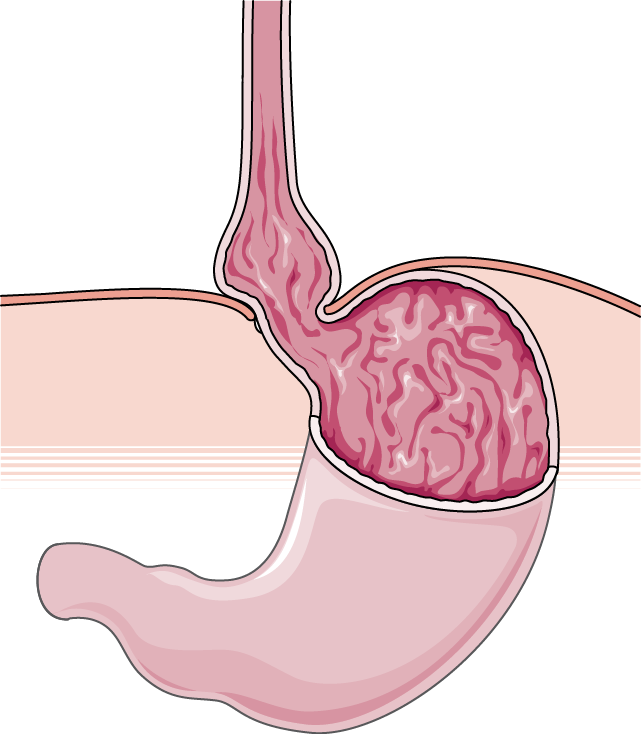
Your diaphragm is the dome-shaped muscle that separates your chest from your belly. Your esophagus (food pipe) passes through a small opening in it, called the hiatus, to reach your stomach.
A hiatal hernia happens when part of the stomach pushes up through that opening into the chest. The risk goes up with age (it's common after 50), extra weight, and smoking.
There are two main types:
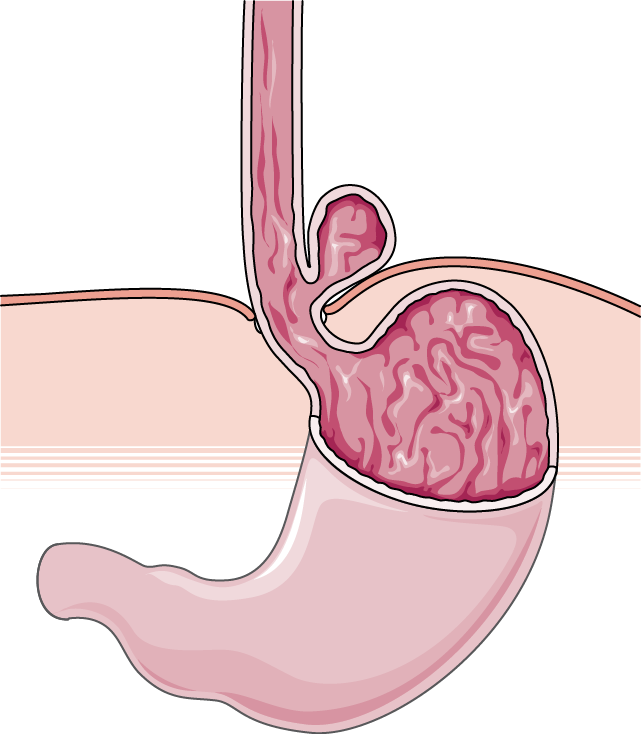
- Sliding hiatal hernia (type I): the most common kind. The spot where the esophagus joins the stomach slides up into the chest. (Left side of the picture shows normal; right side shows a sliding hernia.)
- Paraesophageal hiatal hernia (types II–IV): part of the stomach, and sometimes other organs, bulges up next to the esophagus. These are less common but more likely to cause problems.
The link with reflux
The valve where your esophagus meets your stomach normally keeps acid down. The diaphragm helps squeeze that valve shut. When a hiatal hernia pulls the valve up into the chest, it loses that help, and acid can flow back up more easily. That's reflux (GERD).
A hiatal hernia by itself often causes no symptoms. Most of the discomfort comes from acid, air, or bile flowing backward.
Symptoms
- Heartburn, often worse when bending over or lying down
- Regurgitation: sour fluid or food coming back up
- Chest pain or pressure (always get chest pain checked to rule out your heart)
- Trouble swallowing, or food feeling stuck
- Feeling full quickly, or pain after eating (more common with large paraesophageal hernias)
- Sometimes slow bleeding and anemia (low blood count) with large hernias
How it's diagnosed
- Upper endoscopy (EGD): a thin camera through the mouth looks at the esophagus and stomach.
- Barium swallow X-ray: you drink a chalky liquid that shows the shape of the esophagus and stomach.
- CT scan: a hiatal hernia can also show up on a CT scan, sometimes found while looking for something else.
- Before surgery, I may also order tests that measure acid and how well your esophagus squeezes, so we choose the right operation for you.
Lifestyle and medicine come first
For most people with a sliding hiatal hernia and reflux, treatment starts without surgery:
- Eat smaller meals and avoid heavy, late meals.
- Don't lie down or bend over right after eating.
- Raise the head of your bed 4 to 6 inches (10 to 15 cm).
- Lose weight if needed, and stop smoking.
- Acid-reducing medicine, as recommended by your doctor.
Most symptoms get better with these steps.
When is surgery needed?
Based on guidelines from SAGES (the Society of American Gastrointestinal and Endoscopic Surgeons):
- A sliding hernia without reflux symptoms usually does not need surgery.
- Surgery may help when reflux keeps bothering you despite medicine and lifestyle changes, when you don't want lifelong medicine, or when you have complications such as regurgitation into the lungs.
- Barrett's esophagus: years of acid can change the lining of the esophagus. This is called Barrett's esophagus, and it is a pre-cancerous condition. In my view, repairing the hernia and stopping the reflux can help stop it from getting worse. Even after surgery, you will still need follow-up scopes to keep an eye on it.
- Paraesophageal hernias that cause symptoms should be repaired. This is especially true if they cause trouble swallowing, vomiting, or blockage.
How the repair works: laparoscopic or robotic, with fundoplication
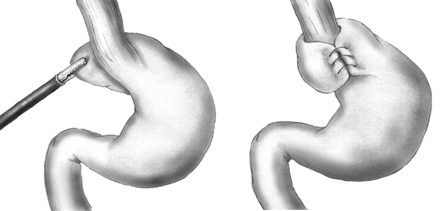
According to SAGES guidelines, laparoscopic repair is the preferred approach for most patients. It works as well as open surgery, with fewer complications around the time of surgery. It's done under general anesthesia through a few small incisions in the upper belly. The main steps:
- Bring the stomach back down into the belly where it belongs.
- Remove the hernia sac and free up enough esophagus so it rests comfortably below the diaphragm.
- Tighten the opening in the diaphragm with stitches. Sometimes I reinforce it.
- Create a new valve with a fundoplication: the top of the stomach is gently wrapped around the lower esophagus, like a collar, to help stop reflux. (The drawing shows the wrap being made.) Depending on your tests, the wrap may go all the way around (Nissen) or partway.
A note from me about the robot: Sometimes I do this operation with the help of the surgical robot. Whether we use it depends on you: your body, your hernia, and what will work best for you. Either way, it is still a minimally invasive operation through small incisions, and I am the one performing it. The robot does not operate on its own; it simply holds the instruments while I guide every move.
Recovery and diet
- Hospital stay: many patients go home the same day or the next day.
- Walking: start the day of surgery.
- Swallowing: the area is swollen at first, so food can feel like it goes down slowly. This usually improves over several weeks.
- Diet: I usually start you on liquids, then soft, moist foods for a few weeks before returning to regular food. Take small bites, chew well, and eat slowly. Avoid bread, tough meat, and fizzy drinks early on.
- Bloating and gas: common for a while. Burping and vomiting may be harder after the wrap. Over-the-counter simethicone (Gas-X) or other anti-gas medicines may give relief.
- Medicine: many patients can stop their reflux medicine. I'll guide you.
- Lifting: follow your specific limits so the diaphragm repair can heal.
When to call your surgeon
Call our office right away, or go to the emergency room after hours, if you have:
- Fever of 101°F (38.3°C) or higher, or chills
- Can't swallow your own saliva or liquids
- Repeated vomiting or retching
- Severe or worsening chest or belly pain
- Redness, swelling, or drainage at an incision
- Black or bloody stools, or vomiting blood
- Shortness of breath or chest pain. Call 911.
If you have a hiatal hernia and haven't had surgery: sudden severe chest or upper belly pain with vomiting, or being unable to keep anything down, needs emergency care.
The bottom line
Most hiatal hernias are small and managed with simple habits and medicine. When reflux won't quit, or a larger hernia causes symptoms, a laparoscopic or robotic repair with a fundoplication can bring real relief. If you've been living with heartburn or a hiatal hernia, I'm happy to talk through your options.
— Roberto Iglesias, MD, FACS
This article is for general education and is not a substitute for personal medical advice.
Sources
- MedlinePlus (U.S. National Library of Medicine). Hiatal hernia.
- Kohn GP, et al.; SAGES Guidelines Committee. Guidelines for the management of hiatal hernia. Surg Endosc. 2013;27:4409–4428. doi:10.1007/s00464-013-3173-3
- National Institute of Diabetes and Digestive and Kidney Diseases (NIDDK). Barrett's Esophagus.
Image credits
Hernia hiatal y reflujo: guía para pacientes
Por Roberto Iglesias, MD, FACS, cirujano general
Muchas personas escuchan por primera vez las palabras "hernia hiatal" después de un endoscopio o una radiografía por acidez. Suena alarmante, pero las hernias hiatales son muy comunes, y la mayoría de las personas nunca necesitan cirugía. Le explico en palabras sencillas qué significa y cuándo la cirugía realmente puede ayudar.
¿Qué es una hernia hiatal?
El diafragma es el músculo en forma de cúpula que separa el pecho del abdomen. El esófago (el tubo de la comida) pasa por una pequeña abertura en él, llamada hiato, para llegar al estómago.
Una hernia hiatal ocurre cuando parte del estómago sube por esa abertura hacia el pecho. El riesgo aumenta con la edad (es común después de los 50), el sobrepeso y el tabaco.
Hay dos tipos principales:
- Hernia hiatal por deslizamiento (tipo I): la más común. El punto donde el esófago se une al estómago se desliza hacia el pecho. (El lado izquierdo de la imagen muestra lo normal; el lado derecho, una hernia por deslizamiento.)
- Hernia paraesofágica (tipos II a IV): parte del estómago, y a veces otros órganos, sube al lado del esófago. Son menos comunes, pero tienen más probabilidad de causar problemas.
La relación con el reflujo
La válvula donde el esófago se une al estómago normalmente mantiene el ácido abajo. El diafragma ayuda a apretar esa válvula. Cuando una hernia hiatal sube la válvula hacia el pecho, pierde esa ayuda, y el ácido puede regresar con más facilidad. Eso es el reflujo (ERGE).
Una hernia hiatal por sí sola muchas veces no causa síntomas. La mayor parte de las molestias viene del ácido, el aire o la bilis que regresan hacia arriba.
Síntomas
- Acidez (agruras), a menudo peor al agacharse o acostarse
- Regurgitación: líquido agrio o comida que regresa a la boca
- Dolor o presión en el pecho (siempre revise el dolor de pecho para descartar el corazón)
- Dificultad para tragar, o sentir que la comida se atora
- Sentirse lleno muy rápido, o dolor después de comer (más común con hernias paraesofágicas grandes)
- A veces sangrado lento y anemia (sangre baja) con hernias grandes
Cómo se diagnostica
- Endoscopia superior: una cámara delgada por la boca revisa el esófago y el estómago.
- Esofagograma con bario: usted toma un líquido parecido a la tiza que muestra la forma del esófago y el estómago en la radiografía.
- Tomografía (CT): una hernia hiatal también puede verse en una tomografía, a veces cuando se busca otra cosa.
- Antes de la cirugía, también puedo pedir estudios que miden el ácido y la fuerza con la que se contrae el esófago, para elegir la operación correcta para usted.
Primero, cambios en el estilo de vida y medicamentos
Para la mayoría de las personas con hernia por deslizamiento y reflujo, el tratamiento empieza sin cirugía:
- Coma porciones pequeñas y evite las comidas pesadas y tarde en la noche.
- No se acueste ni se agache justo después de comer.
- Levante la cabecera de la cama de 10 a 15 cm (4 a 6 pulgadas).
- Baje de peso si es necesario, y deje de fumar.
- Medicamentos para bajar el ácido, según le indique su médico.
La mayoría de los síntomas mejoran con estos pasos.
¿Cuándo se necesita cirugía?
Según las guías de SAGES (la Sociedad Americana de Cirujanos Gastrointestinales y Endoscópicos):
- Una hernia por deslizamiento sin síntomas de reflujo por lo general no necesita cirugía.
- La cirugía puede ayudar cuando el reflujo le sigue molestando a pesar de los medicamentos y los cambios de hábitos, cuando no quiere tomar medicamentos de por vida, o cuando hay complicaciones como líquido que pasa a los pulmones.
- Esófago de Barrett: años de ácido pueden cambiar el revestimiento del esófago. A esto se le llama esófago de Barrett, y es una condición precancerosa. En mi opinión, reparar la hernia y detener el reflujo puede ayudar a que no empeore. Aun después de la cirugía, necesitará endoscopias de seguimiento para vigilarlo.
- Las hernias paraesofágicas que causan síntomas deben repararse. Esto es aún más importante si causan dificultad para tragar, vómitos u obstrucción.
Cómo se repara: por laparoscopía o con robot, con funduplicatura
Según las guías de SAGES, la reparación laparoscópica es la técnica preferida para la mayoría de los pacientes. Funciona igual de bien que la cirugía abierta, con menos complicaciones alrededor de la operación. Se hace con anestesia general, a través de unas pocas incisiones pequeñas en la parte alta del abdomen. Los pasos principales:
- Bajar el estómago de regreso al abdomen, donde pertenece.
- Quitar el saco de la hernia y liberar suficiente esófago para que quede cómodo debajo del diafragma.
- Cerrar la abertura del diafragma con puntos. A veces la refuerzo.
- Crear una nueva válvula con una funduplicatura: la parte de arriba del estómago se envuelve con suavidad alrededor de la parte baja del esófago, como un cuello de camisa, para ayudar a detener el reflujo. (El dibujo muestra cómo se hace la envoltura.) Según sus estudios, la envoltura puede ser completa (Nissen) o parcial.
Una nota mía sobre el robot: A veces hago esta operación con la ayuda del robot quirúrgico. Usarlo o no depende de usted: de su cuerpo, de su hernia y de lo que mejor le convenga. De cualquier forma, sigue siendo una operación mínimamente invasiva con incisiones pequeñas, y soy yo quien la realiza. El robot no opera por sí solo; simplemente sostiene los instrumentos mientras yo guío cada movimiento.
Recuperación y alimentación
- Hospital: muchos pacientes se van a casa el mismo día o al día siguiente.
- Caminar: empiece el mismo día de la cirugía.
- Tragar: al principio la zona está inflamada, y puede sentir que la comida baja despacio. Por lo general mejora en unas semanas.
- Dieta: normalmente empiezo con líquidos, luego alimentos suaves y húmedos por unas semanas, antes de volver a la comida normal. Tome bocados pequeños, mastique bien y coma despacio. Al principio evite el pan, la carne dura y las bebidas con gas.
- Inflamación y gases: son comunes por un tiempo. Eructar y vomitar puede ser más difícil después de la envoltura. La simeticona (Gas-X) de venta libre u otros medicamentos contra los gases pueden darle alivio.
- Medicamentos: muchos pacientes pueden dejar su medicina para el reflujo. Yo le indicaré.
- Cargar peso: siga sus límites específicos para que la reparación del diafragma sane.
Cuándo llamar a su cirujano
Llame a nuestra oficina de inmediato, o vaya a la sala de emergencias fuera del horario, si tiene:
- Fiebre de 101 °F (38.3 °C) o más, o escalofríos
- No puede tragar su propia saliva ni líquidos
- Vómitos o arcadas repetidas
- Dolor fuerte o que empeora en el pecho o el abdomen
- Enrojecimiento, hinchazón o secreción en una herida
- Heces negras o con sangre, o vómito con sangre
- Falta de aire o dolor de pecho. Llame al 911.
Si tiene una hernia hiatal y no ha sido operado: un dolor fuerte y repentino en el pecho o la parte alta del abdomen con vómitos, o no poder retener nada, necesita atención de emergencia.
En resumen
La mayoría de las hernias hiatales son pequeñas y se controlan con hábitos sencillos y medicamentos. Cuando el reflujo no se quita, o una hernia grande causa síntomas, una reparación laparoscópica o robótica con funduplicatura puede dar un verdadero alivio. Si ha estado viviendo con acidez o con una hernia hiatal, con gusto hablamos de sus opciones.
— Roberto Iglesias, MD, FACS
Este artículo es solo para educación general y no reemplaza el consejo médico personal.
Fuentes
- MedlinePlus (Biblioteca Nacional de Medicina de EE. UU.). Hiatal hernia (en inglés).
- Kohn GP, et al.; SAGES Guidelines Committee. Guidelines for the management of hiatal hernia. Surg Endosc. 2013;27:4409–4428. doi:10.1007/s00464-013-3173-3
- National Institute of Diabetes and Digestive and Kidney Diseases (NIDDK). Barrett's Esophagus (en inglés).
Créditos de las imágenes


