What to Do When Someone Is Choking: A Simple Guide for Babies, Kids, and Adults
By Dr. Roberto Iglesias, MD, FACS
Choking can happen in seconds at a dinner table, a birthday party, or in the back seat of the car. The good news is that the steps to help are simple, and anyone can learn them. You don't need medical training. You just need to know which technique fits the person in front of you.
First, is it really choking?
Someone who is coughing hard, talking, or crying is still moving air. Stay close, encourage them to keep coughing, and don't hit their back or start thrusts yet. A strong cough is the body's best tool.
Act right away if the person:
- Can't talk, cry, or breathe
- Has a weak, silent, or squeaky cough
- Grabs their throat (the universal choking sign)
- Starts turning blue or gray around the lips
Have someone call 911 right away.
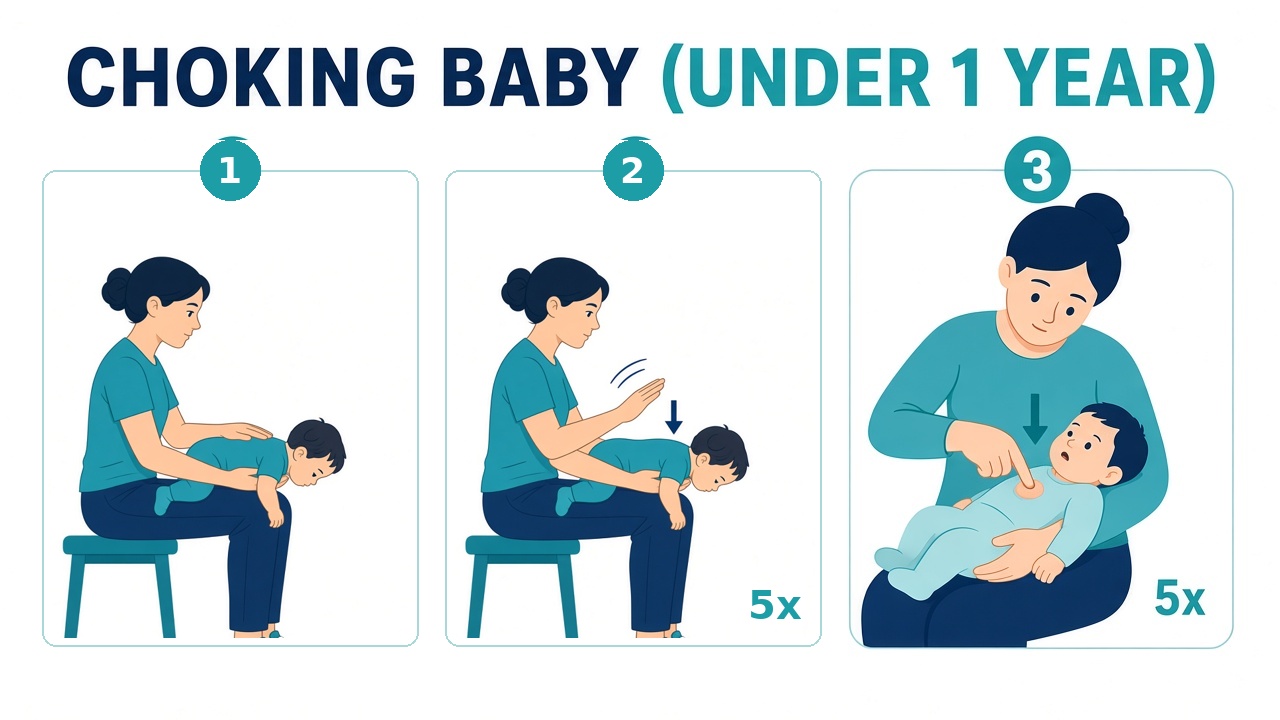
Babies under 1 year: back blows and chest thrusts
A baby's body is small and fragile, so never use belly thrusts (the Heimlich maneuver) on a baby under 1. Use this instead:
- Sit down and lay the baby face-down along your forearm, with your arm resting on your thigh. The baby's head should hang lower than the chest, so gravity helps.
- Support the head by holding the jaw, not the soft throat.
- Give 5 firm back blows between the shoulder blades with the heel of your other hand.
- Turn the baby face-up onto your other forearm, still keeping the head low.
- Give 5 chest thrusts: put two fingers in the center of the chest, just below the nipple line, and press down firmly about 1½ inches.
- Keep repeating 5 back blows and 5 chest thrusts until the object comes out or the baby starts crying, coughing, or breathing.
- If the baby goes limp or stops responding, start infant CPR and call 911 if no one has.
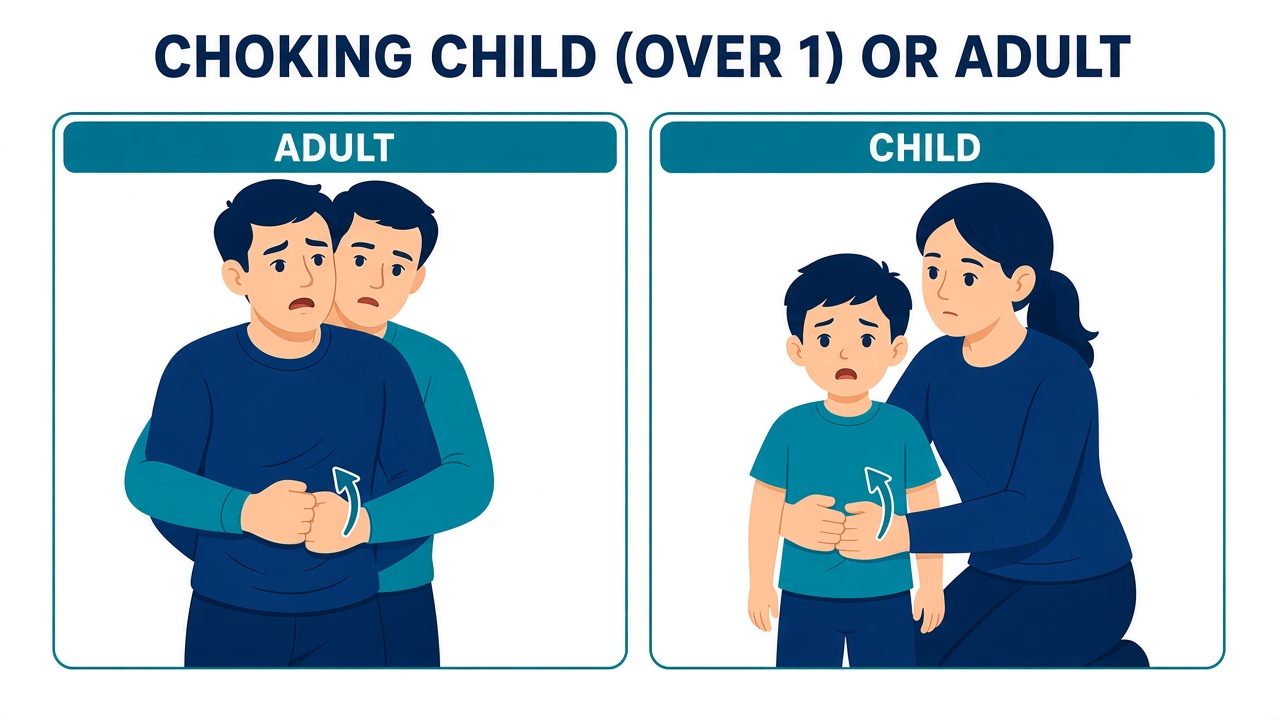
Children over 1 and adults: abdominal thrusts (the Heimlich maneuver)
- Stand behind the person. For a small child, kneel so you're at their height.
- Wrap both arms around their waist.
- Make a fist and place the thumb side just above the belly button, well below the breastbone.
- Grab your fist with your other hand.
- Give quick, hard thrusts in and up, as if you're trying to lift them.
- Keep going until the object comes out or the person can breathe, cough, or talk.
- If they pass out, gently lower them to the floor, call 911, and start CPR.
When to change the technique
Pregnant or larger people. If you can't reach around the belly, or the person is visibly pregnant, use chest thrusts instead. Wrap your arms under their armpits, place your fist on the center of the breastbone, and pull straight back hard. This protects the baby and works when your arms won't fit around the waist.
If you're alone and choking. Call 911 if you can, even if you can't speak. Then give yourself abdominal thrusts with your own fist, or lean over the back of a sturdy chair or a countertop and push your upper belly hard against it.
A few important don'ts
- Don't do a blind finger sweep. Reaching into the mouth can push the object deeper. Only remove something you can clearly see.
- Don't give water to someone who is choking.
- Don't hold a baby upside down by the feet.
After the scare: get checked
Even if the object comes out and everyone seems fine, see a doctor afterward, especially after abdominal or chest thrusts. Those thrusts can bruise or injure the belly or ribs, and a small piece of food can sometimes slip into the lungs. A persistent cough, wheezing, fever, or trouble breathing in the days that follow needs medical attention.
Prevention goes a long way
- Cut food for young children into small pieces. Grapes, hot dogs, and cherry tomatoes should be quartered lengthwise.
- Keep nuts, hard candy, popcorn, and small toys away from children under 4.
- Have kids sit down while eating. No running with food.
- Adults: take your time, chew well, and go easy on alcohol at meals.
My best advice: take a class
Reading this is a great start, but practicing on a mannequin builds the muscle memory you'll need when your heart is racing. The American Red Cross and the American Heart Association offer CPR and first aid classes in a couple of hours, often on weekends. It's one of the best investments you can make for your family.
This article is general education, not a substitute for hands-on training or medical care. In an emergency, call 911.
Qué hacer cuando alguien se está atragantando: guía sencilla para bebés, niños y adultos
Por el Dr. Roberto Iglesias, MD, FACS
Un atragantamiento puede pasar en segundos: en la mesa, en una fiesta de cumpleaños o en el asiento de atrás del carro. La buena noticia es que los pasos para ayudar son sencillos y cualquier persona los puede aprender. No necesita entrenamiento médico. Solo necesita saber qué técnica usar según la persona que tiene enfrente.
Primero, ¿de verdad se está atragantando?
Si la persona tose fuerte, habla o llora, todavía le está entrando aire. Quédese cerca, anímela a seguir tosiendo y no le golpee la espalda ni empiece las compresiones todavía. Una tos fuerte es la mejor herramienta del cuerpo.
Actúe de inmediato si la persona:
- No puede hablar, llorar ni respirar
- Tiene una tos débil, silenciosa o con chillido
- Se agarra la garganta (la señal universal de atragantamiento)
- Se le ponen los labios azules o grises
Pida que alguien llame al 911 de inmediato.
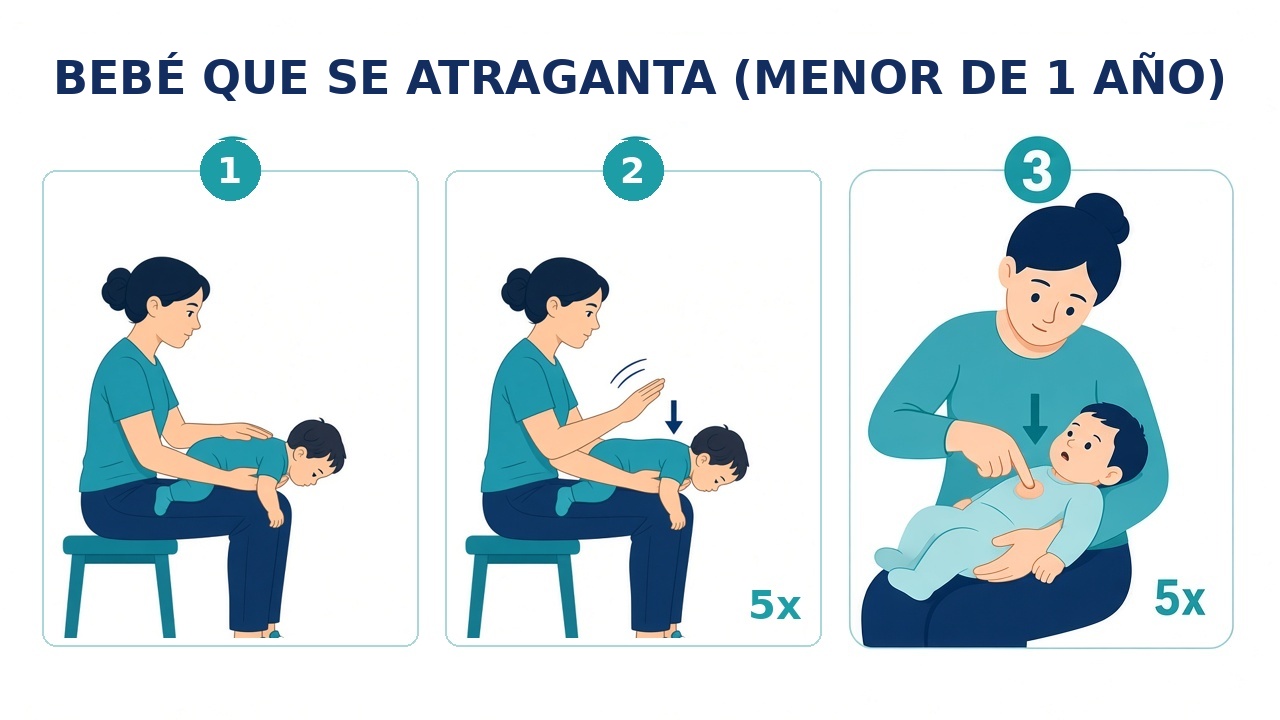
Bebés menores de 1 año: golpes en la espalda y compresiones en el pecho
El cuerpo de un bebé es pequeño y delicado, así que nunca haga compresiones en el abdomen (la maniobra de Heimlich) a un bebé menor de 1 año. Haga esto:
- Siéntese y acueste al bebé boca abajo sobre su antebrazo, con el brazo apoyado en su muslo. La cabeza del bebé debe quedar más baja que el pecho, para que la gravedad ayude.
- Sostenga la cabeza agarrando la mandíbula, no la parte blanda de la garganta.
- Dé 5 golpes firmes en la espalda, entre los omóplatos, con la base de la palma de la otra mano.
- Voltee al bebé boca arriba sobre su otro antebrazo, manteniendo la cabeza baja.
- Dé 5 compresiones en el pecho: ponga dos dedos en el centro del pecho, justo debajo de la línea de los pezones, y presione firme hacia abajo unos 4 cm (1½ pulgadas).
- Repita 5 golpes y 5 compresiones hasta que salga el objeto o el bebé llore, tosa o respire.
- Si el bebé se pone flácido o deja de responder, empiece la RCP infantil y llame al 911 si nadie lo ha hecho.
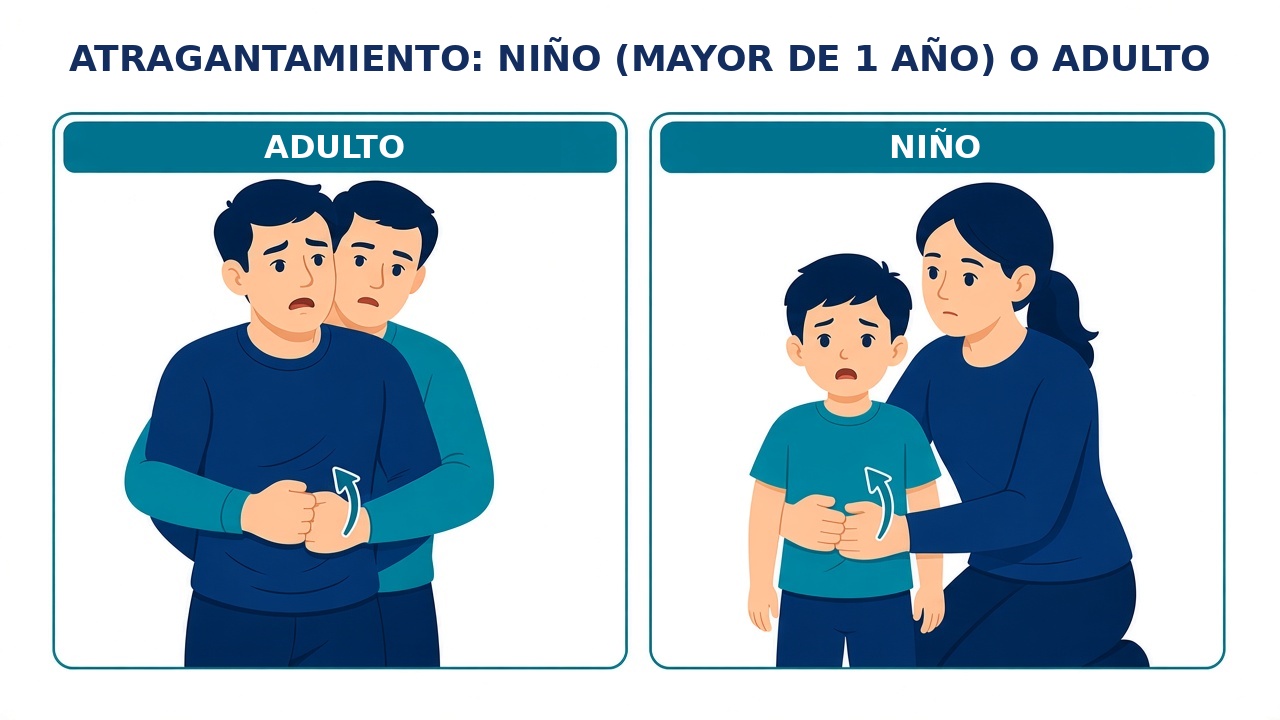
Niños mayores de 1 año y adultos: compresiones abdominales (maniobra de Heimlich)
- Párese detrás de la persona. Si es un niño pequeño, arrodíllese para quedar a su altura.
- Rodee su cintura con los dos brazos.
- Haga un puño y coloque el lado del pulgar justo arriba del ombligo, bien por debajo del esternón.
- Agarre el puño con la otra mano.
- Haga compresiones rápidas y fuertes hacia adentro y hacia arriba, como si quisiera levantarla.
- Siga hasta que salga el objeto o la persona pueda respirar, toser o hablar.
- Si se desmaya, bájela con cuidado al piso, llame al 911 y empiece la RCP.
Cuándo cambiar la técnica
Embarazadas o personas de talla grande. Si no alcanza a rodear el abdomen, o si la persona está visiblemente embarazada, haga compresiones en el pecho. Pase los brazos por debajo de sus axilas, ponga el puño en el centro del esternón y jale con fuerza directo hacia atrás. Así protege al bebé, y funciona cuando sus brazos no alcanzan a rodear la cintura.
Si usted está solo y se atraganta. Llame al 911 si puede, aunque no pueda hablar. Luego hágase compresiones abdominales con su propio puño, o inclínese sobre el respaldo de una silla firme o el borde de un mostrador y empuje con fuerza la parte alta del abdomen contra él.
Lo que NO debe hacer
- No meta el dedo a ciegas en la boca. Puede empujar el objeto más adentro. Solo saque algo que pueda ver claramente.
- No le dé agua a alguien que se está atragantando.
- No cuelgue a un bebé de cabeza agarrándolo de los pies.
Después del susto: vaya al médico
Aunque el objeto salga y todos parezcan estar bien, consulte a un médico después, sobre todo si hizo compresiones abdominales o en el pecho. Pueden lastimar el abdomen o las costillas, y a veces un pedacito de comida se va a los pulmones. Si en los días siguientes hay tos que no se quita, silbido al respirar, fiebre o dificultad para respirar, busque atención médica.
Prevenir ayuda mucho
- Corte la comida de los niños pequeños en pedacitos. Las uvas, las salchichas y los tomates cherry se deben cortar en cuatro a lo largo.
- Mantenga las nueces, los dulces duros, las palomitas y los juguetes pequeños lejos de los niños menores de 4 años.
- Que los niños coman sentados. Nada de correr con comida en la boca.
- Adultos: coman con calma, mastiquen bien y moderen el alcohol en las comidas.
Mi mejor consejo: tome una clase
Leer esto es un gran comienzo, pero practicar con un maniquí le da la memoria muscular que va a necesitar cuando el corazón le esté latiendo a mil. La Cruz Roja Americana y la Asociación Americana del Corazón ofrecen clases de RCP y primeros auxilios de un par de horas, muchas veces en fin de semana, y algunas en español. Es una de las mejores inversiones que puede hacer por su familia.
Este artículo es educativo y no reemplaza el entrenamiento práctico ni la atención médica. En una emergencia, llame al 911.